If you've been listening to the USA news lately you know that there's been an E. coli outbreak that's been traced back to spinach from a three-county area in California.
USA farmers are alway trying to develop smart systems for growing and marketing their crops. California spinach growers developed a smart system, banding together to cooperatively process and market their spinach. It was a smart system because it reduced costs and increased demand for spinach.
But organizations thrive not only have smart systems but smart and friendly systems. The spinach marketing system did not prove to be friendly because it spread E. coli, sickening 166 people in 25 states. The E. coli bacteria have been traced back to nine possible farms but because the spinach from all the farms are combined, it has improved impossible this far to pinpoint the exact source.
"There is going to be a need to examine the system -- what's working, what's not working. At this point I wouldn't want to rule anything in or anything out," said Dr. David Acheson, chief medical officer for the FDA's Food Safety and Applied Nutrition branch.
The dominant system in the USA involves trucking fruits and vegetables all over the country. That's how tainted spinach from three counties in California made people sick in 25 states.
But trucking food from vast warehouses is not the only system.
I live on a farm that, for the most part, uses a smarter, friendlier system. Grow it and then market it locally through farmers markets.
Farmers markets are a smart and friendly system for getting your spinach. Most farmers markets require sellers to grow the produce what they sell. That means that while you may pay a little more at a farmers market, that friendly man or woman you're buying from is the farmer who grew the spinach. And it wasn't combined with produce from dozens of other farms and trucked half way across the country.
I'm not a farmer but I've enjoyed eating Plow Creek produce for many years. Today for lunch I had seedless watermelon. I know Neil and Jim who grew the melon.
Now that's a smart and friendly system.
Saturday, September 23, 2006


Saturday, September 16, 2006
You don't need a title to be a leader
The humble hierarchy path in Evergreen Leaders' 7 Paths is based on the principle that "humble hierarchy leaders have little personal ambition, have unwavering will to help the organization transform the lives of those it serves, and creates space for all to thrive."
Mark Sanborn's new book, You don't need a title to be a leader, has a great story about humble hierarchy at work. You can check the story out Mark's Leadership Lessons.
Mark Sanborn's new book, You don't need a title to be a leader, has a great story about humble hierarchy at work. You can check the story out Mark's Leadership Lessons.
Sunday, September 03, 2006
Would you recommend us?
The September 2006 Inc. issues has an article (currently available in the magazine and online after the October issue comes out) that declares you can "perfect your service by asking the only question that matters."
And that question? "Would you recommend us?" Actually they recommend a follow-up question as well. Ask those who say they would not recommend your service: If you would not recommend us, whey not?"
The article is based on the work of Fred Reichheld, author of The Ultimate Question.
Now that sounds like a smart and friendly system for improving customer satisfaction.
And that question? "Would you recommend us?" Actually they recommend a follow-up question as well. Ask those who say they would not recommend your service: If you would not recommend us, whey not?"
The article is based on the work of Fred Reichheld, author of The Ultimate Question.
Now that sounds like a smart and friendly system for improving customer satisfaction.
Saturday, September 02, 2006
Power to the people, part II
When Plow Creek Fellowship was founded in 1971 as a communal church the USA was riding the waves of the countercultural revolution of the 60’s. Plow Creek rode one of the waves of the counterculture--the Jesus movement.
Sarah and I arrived at Plow Creek in 1977 and three years later Sarah was one of five pregnant women at Plow Creek. In fact, almost 20% of the adults in the community were pregnant that year.
Every organization is part of an ecosystem and the ecosystem profoundly affects the organization. For instance, every organization is part of the physical environment. While an extreme example, when Hurricane Katrina hit the Gulf coast of Mississippi and Lousians in 2005, it showed how every organization in in its path had a complex relationship with the physical environment.
Social, political, legal, economic, and religious systems are all part of the ecosystems that organizations operate in.
The principle that Evergreen Leader’s ecosystem path is founded on states that organizations that build healthy, shifting relationships with their physical, social, political, legal, economic, and religious systems thrive.
In its early years Plow Creek Fellowship had dynamic relationship with its environment. The founders were all a generation older than the youth who arrived in the 1970’s. When I lip-synced to Larry Norman’s “Why Should the Devil Have All the Good Music?” at a Plow Creek talent show complete with strobe lights set up be my friend Kent Rathgen, it was a signal that Plow Creek’s environment had shifted.
The teenage children of founders were shocked and delighted. This was definitely not the music of their parents. But their parents were willing to build healthy, shifting relationships with the 20-somethings who arrived at Plow Creek having been deeply influenced by the counterculture.
What, you may well be wondering, has this to do with tension in the community in 2006 that signaled a need for change in the decision-making structure?
A 1995 decision by Plow Creek Fellowship led to a significant change in the social ecosystem that PCF operates in today.
From 1971 to 1995 the only way to be a member at Plow Creek was to be communal, to be part of the common treasury and communal decision-making. In 1995 the group decided to make it possible for people to join Plow Creek Mennonite Church without joining the communal group, Plow Creek Fellowship.
Starting in 1997 younger families began to join the church without joining the fellowship. By 2005 half were members of the church without being members of the fellowship and half were members of both. Most of the new church members lived on the farm, renting from the fellowship.
As you can see the ecosystem the fellowship operates in has shifted significantly.
The demographics of the fellowship have also shifted. By 2005 the youngest member was in her late 40’s and the oldest in her early 80’s.
In the early 2000s the fellowship began talking about attracting the next generation. In 2005 the fellowship affirmed a plan to launch a three-month to one-year internship in communal living. In a break from past tradition the group affirmed interns participating in members meeting through out the internship. Previously people interested in joining PCF attended members meeting only in the final stage of becoming members--we called these folks sharing neighbors--and they they simply observed the decision-making. Only member actually affirmed decisions as part of the members meeting.
In the summer of 2006 interns began attending meetings for the first time. At the same time several of the younger families who were part of the church expresses an interest in becoming sharing neighbors.
The ecosystem had shifted. Now we had folks who had lived on the farm for one to five years wanting to explore becoming part of the community.
When the ecosystem of an organization shifts sufficiently it creates anxiety within the organization, making it difficult for the organization to build healthy, shifting relationships with a changing environment.
Difficult but not impossible.
An organization with a strong sense of its own treasure can shift within its ecosystem without feeling that the treasure of the organization is going to given away in the change.
Next time I’ll explore how Evergreen Leaders treasure path made it possible for me to propose a change in our decision-making pattern that addressed both the shift in the fellowship’s ecosystem and the need for a change to create a smart and friendly decision-making system.
Sarah and I arrived at Plow Creek in 1977 and three years later Sarah was one of five pregnant women at Plow Creek. In fact, almost 20% of the adults in the community were pregnant that year.
Every organization is part of an ecosystem and the ecosystem profoundly affects the organization. For instance, every organization is part of the physical environment. While an extreme example, when Hurricane Katrina hit the Gulf coast of Mississippi and Lousians in 2005, it showed how every organization in in its path had a complex relationship with the physical environment.
Social, political, legal, economic, and religious systems are all part of the ecosystems that organizations operate in.
The principle that Evergreen Leader’s ecosystem path is founded on states that organizations that build healthy, shifting relationships with their physical, social, political, legal, economic, and religious systems thrive.
In its early years Plow Creek Fellowship had dynamic relationship with its environment. The founders were all a generation older than the youth who arrived in the 1970’s. When I lip-synced to Larry Norman’s “Why Should the Devil Have All the Good Music?” at a Plow Creek talent show complete with strobe lights set up be my friend Kent Rathgen, it was a signal that Plow Creek’s environment had shifted.
The teenage children of founders were shocked and delighted. This was definitely not the music of their parents. But their parents were willing to build healthy, shifting relationships with the 20-somethings who arrived at Plow Creek having been deeply influenced by the counterculture.
What, you may well be wondering, has this to do with tension in the community in 2006 that signaled a need for change in the decision-making structure?
A 1995 decision by Plow Creek Fellowship led to a significant change in the social ecosystem that PCF operates in today.
From 1971 to 1995 the only way to be a member at Plow Creek was to be communal, to be part of the common treasury and communal decision-making. In 1995 the group decided to make it possible for people to join Plow Creek Mennonite Church without joining the communal group, Plow Creek Fellowship.
Starting in 1997 younger families began to join the church without joining the fellowship. By 2005 half were members of the church without being members of the fellowship and half were members of both. Most of the new church members lived on the farm, renting from the fellowship.
As you can see the ecosystem the fellowship operates in has shifted significantly.
The demographics of the fellowship have also shifted. By 2005 the youngest member was in her late 40’s and the oldest in her early 80’s.
In the early 2000s the fellowship began talking about attracting the next generation. In 2005 the fellowship affirmed a plan to launch a three-month to one-year internship in communal living. In a break from past tradition the group affirmed interns participating in members meeting through out the internship. Previously people interested in joining PCF attended members meeting only in the final stage of becoming members--we called these folks sharing neighbors--and they they simply observed the decision-making. Only member actually affirmed decisions as part of the members meeting.
In the summer of 2006 interns began attending meetings for the first time. At the same time several of the younger families who were part of the church expresses an interest in becoming sharing neighbors.
The ecosystem had shifted. Now we had folks who had lived on the farm for one to five years wanting to explore becoming part of the community.
When the ecosystem of an organization shifts sufficiently it creates anxiety within the organization, making it difficult for the organization to build healthy, shifting relationships with a changing environment.
Difficult but not impossible.
An organization with a strong sense of its own treasure can shift within its ecosystem without feeling that the treasure of the organization is going to given away in the change.
Next time I’ll explore how Evergreen Leaders treasure path made it possible for me to propose a change in our decision-making pattern that addressed both the shift in the fellowship’s ecosystem and the need for a change to create a smart and friendly decision-making system.
Thursday, August 31, 2006
Power to the people, part I
“Most organizations are designed so that a few people make decisions and the role of the rest of the people in the organization is to complain about the decisions,” I said at a dinner last fall.
As I said it I felt my stomach drop and the drop had nothing to do with the dinner or my dinner companions--Stephanie Grimes, Evergreen Leaders president, her husband Rodney, and a couple of other people from their church and my wife Sarah.
My stomach dropped because I suddenly remembered all the complaints I had been fielding from members of Plow Creek Fellowship over the previous year. I’ve been an elder of PCF, a communal group, since 1981. The group owns 190 acres, runs businesses, serves as a spiritual community, and sends members on mission. Plow Creek was founded as a seven-day a week way of being Christian rather than the dominant model of church on Sunday’s and maybe a time or two in between.
It was also founded to be a group where everyone could have an equal voice in decision-making and where each person had an important role in the life of the community.
But when my stomach dropped I asked myself: Could it be that the complaints are coming because PCF is designed for a few people to be in the role of decision makers and the rest are given the role of complaining about the decisions?
On the face of it PCF is designed to do just the opposite. All major decisions are made in members meeting by consensus. But organizations are complex and leaders need to dig deep to understand the systems at work in their organizations.
For the past three years, since several other people and I founded Evergreen Leaders, I have been thinking deeply about what makes organizations thrive. After doing workshops for two years on the topic, much reading and after much thinking (and prayer), last spring I identified 7 paths that organizations use to thrive.
The smart and friendly systems path is one of the seven paths thriving organizations use. The path is based on the principle that organizations thrive or shrivel on the systems they set up for getting things done.
Organizations that shrivel focus on the paradigm: we’ve always done it this way. Organizations that thrive focus on the paradigm: we‘re always looking for ways to make our systems smart and friendly.
There’s a very good reason organizations tend to keep old systems. Once upon a time those systems were great, served the organization well, and, in fact, helped the organization to thrive.
But then slowly reality shifted and the ways of doing things that helped the organization thrive no longer do. Leaders can throw all kinds of energy into making the old systems work but that doesn’t seem to help the organization get back to the thriving days.
A long time ago farmers went through the same experience. They planted corn on a new piece of ground and got an amazing crop. Great, they thought, I’ll do the same thing next year. They did and got another great crop of corn. Slowly but surely the corn crops began to dwindle.
The farmer thought deeply and decided to try beans on the piece of ground. He got a fantastic crop, Great, he thought, this ground is best for beans. Year after year he planted beans and slowly but surely the bean crops began to dwindle.
He thought deeply again and planted corn on the piece of ground. He got a great crop of corn. Then the next year he planted beans and got a great bean crop. The next year he planted corn and got a great corn crop. Thus was born crop rotation.
Organizations that are always looking for ways to make their systems smart and friendly are like the farmers who discovered crop rotation. This is not change for change sake but change to help the organization thrive.
As I thought deeply about the Plow Creek decision-making system I realized the growing frustration within the organization pointed to a need for crop rotation. We needed to make changes in how we made decisions as part of taking the smart and friendly systems path.
I thought more about the need for change in the fellowship I realized that in all likelihood our frustrations were rising not only from a need for smart and friendly systems but also from major changes in the context that PCF operates in.
Tomorrow is my day off. On Saturday I’ll post part II focusing on how Evergreen Leaders’ ecosystem path helped as I struggled with the changes needed in PCF decision-making model.
As I said it I felt my stomach drop and the drop had nothing to do with the dinner or my dinner companions--Stephanie Grimes, Evergreen Leaders president, her husband Rodney, and a couple of other people from their church and my wife Sarah.
My stomach dropped because I suddenly remembered all the complaints I had been fielding from members of Plow Creek Fellowship over the previous year. I’ve been an elder of PCF, a communal group, since 1981. The group owns 190 acres, runs businesses, serves as a spiritual community, and sends members on mission. Plow Creek was founded as a seven-day a week way of being Christian rather than the dominant model of church on Sunday’s and maybe a time or two in between.
It was also founded to be a group where everyone could have an equal voice in decision-making and where each person had an important role in the life of the community.
But when my stomach dropped I asked myself: Could it be that the complaints are coming because PCF is designed for a few people to be in the role of decision makers and the rest are given the role of complaining about the decisions?
On the face of it PCF is designed to do just the opposite. All major decisions are made in members meeting by consensus. But organizations are complex and leaders need to dig deep to understand the systems at work in their organizations.
For the past three years, since several other people and I founded Evergreen Leaders, I have been thinking deeply about what makes organizations thrive. After doing workshops for two years on the topic, much reading and after much thinking (and prayer), last spring I identified 7 paths that organizations use to thrive.
The smart and friendly systems path is one of the seven paths thriving organizations use. The path is based on the principle that organizations thrive or shrivel on the systems they set up for getting things done.
Organizations that shrivel focus on the paradigm: we’ve always done it this way. Organizations that thrive focus on the paradigm: we‘re always looking for ways to make our systems smart and friendly.
There’s a very good reason organizations tend to keep old systems. Once upon a time those systems were great, served the organization well, and, in fact, helped the organization to thrive.
But then slowly reality shifted and the ways of doing things that helped the organization thrive no longer do. Leaders can throw all kinds of energy into making the old systems work but that doesn’t seem to help the organization get back to the thriving days.
A long time ago farmers went through the same experience. They planted corn on a new piece of ground and got an amazing crop. Great, they thought, I’ll do the same thing next year. They did and got another great crop of corn. Slowly but surely the corn crops began to dwindle.
The farmer thought deeply and decided to try beans on the piece of ground. He got a fantastic crop, Great, he thought, this ground is best for beans. Year after year he planted beans and slowly but surely the bean crops began to dwindle.
He thought deeply again and planted corn on the piece of ground. He got a great crop of corn. Then the next year he planted beans and got a great bean crop. The next year he planted corn and got a great corn crop. Thus was born crop rotation.
Organizations that are always looking for ways to make their systems smart and friendly are like the farmers who discovered crop rotation. This is not change for change sake but change to help the organization thrive.
As I thought deeply about the Plow Creek decision-making system I realized the growing frustration within the organization pointed to a need for crop rotation. We needed to make changes in how we made decisions as part of taking the smart and friendly systems path.
I thought more about the need for change in the fellowship I realized that in all likelihood our frustrations were rising not only from a need for smart and friendly systems but also from major changes in the context that PCF operates in.
Tomorrow is my day off. On Saturday I’ll post part II focusing on how Evergreen Leaders’ ecosystem path helped as I struggled with the changes needed in PCF decision-making model.
Wednesday, August 30, 2006
Rich's blog 2.0
Most of my readers have probably gotten discouraged since I haven't posted since June 11. Sorry about that.
I've been doing some deep thinking about how to carry out the mission of Evergreen Leaders--helping nonprofits thrive. Early in the summer I condensed thirty years of leading secular and religious organizations into The 7 paths of thriving organizations. I think the 7 paths will be the treasure that Evergreen Leaders has to offer the world.
The 7 paths emerged out of two years of doing Evergreen Leaders workshops for nonprofits on the topics of listening, envisioning, and encouraging. The two years of workshops showed me that I needed to sharpen the message. Saying an organizations can thrive through listening, envisioning and encouraging is sort of like saying you can get to Chicago's Millenium Park from Wisconsin, Indiana, or Iowa.
True, but if you are in Nebraska and you stop and ask for directions to to Chicago's Millenium Park you need a little more specifics than "drive though Iowa and Illinois until you get to Chicago and then drive downtown and it's by the lake."
I'm very excited about the 7 paths because I think they will be as helpful in providing a map for organizations as Stephen Covey's The Seven Habits of Highly Effective People have been for individuals.
I think we have a treasure in the 7 paths. Part of my deep pondering has been: how can we create smart and friendly systems for people to discover, explore, and learn the paths?
I've decide to re-create this blog into a smart and friendly system for you to use to discover the 7 paths. To the left of the most recent entry you'll find a new section (thanks to Taher Baderkhan) called Categories. From now on each of the entries will be archived in one or more of the catgories. Over time there will be a treasure trove of information about each of the 7 paths.
I've been doing some deep thinking about how to carry out the mission of Evergreen Leaders--helping nonprofits thrive. Early in the summer I condensed thirty years of leading secular and religious organizations into The 7 paths of thriving organizations. I think the 7 paths will be the treasure that Evergreen Leaders has to offer the world.
The 7 paths emerged out of two years of doing Evergreen Leaders workshops for nonprofits on the topics of listening, envisioning, and encouraging. The two years of workshops showed me that I needed to sharpen the message. Saying an organizations can thrive through listening, envisioning and encouraging is sort of like saying you can get to Chicago's Millenium Park from Wisconsin, Indiana, or Iowa.
True, but if you are in Nebraska and you stop and ask for directions to to Chicago's Millenium Park you need a little more specifics than "drive though Iowa and Illinois until you get to Chicago and then drive downtown and it's by the lake."
I'm very excited about the 7 paths because I think they will be as helpful in providing a map for organizations as Stephen Covey's The Seven Habits of Highly Effective People have been for individuals.
I think we have a treasure in the 7 paths. Part of my deep pondering has been: how can we create smart and friendly systems for people to discover, explore, and learn the paths?
I've decide to re-create this blog into a smart and friendly system for you to use to discover the 7 paths. To the left of the most recent entry you'll find a new section (thanks to Taher Baderkhan) called Categories. From now on each of the entries will be archived in one or more of the catgories. Over time there will be a treasure trove of information about each of the 7 paths.
Sunday, June 11, 2006
Happy birth, dear grandchild (5)

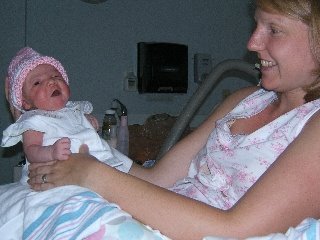 Plans are I won't see and hold Aaliyah until August when Hannah and Donny travel to Illinois. So I look at e-mailed photos. These two are my favorites taken on day two of Aaliyah's life. The next morning I spoke by phone with Hannah Donny before they went went home from the hospital. "“I love it! I love having a baby,” Donny said to me. I look at this photo of dad and daughter and the excitement in Donny's voice comes back. For years before Hannah met Donny I prayed for a good husband for her I about cry with gratitude as I look at this photo--a good man who loves Hannah and Aaliyah.
“She is so precious. We just love looking at her,” Hannah said. And the photo says it as well. Children love to be looked at. One of these year's I'll hear a little girl's voice, "Grandpa, watch me."
Thursday, June 08, 2006
Happy birth, dear grandchild (4)

The photos I have been waiting for arrived during the night. Here's is mother and child checking each other out in wide-eyed wonder.
Wednesday, June 07, 2006
Happy birth, dear grandchild (3)
Aaliyah Jean Yvonne Hackworth, welcome to the world.
Late this afternoon I went to the Met where I swim 3-4 times a week and I told lots of folks that I had become a grandpa today and they all celebrated with me.
At noon Donny called me and told me that he cut the umbilical cord. Yeah, Donny! He also held her lots this morning. Hannah nursed her twice before 11:00 this morning. She is wrapped her pearents love.
Heidi arrived around 2:00 p.m. in time to take care of Aaliyah so that Hannah and Donny could rest. Yeah, Heidi!
Heidi is going to e-mail us photos. I can hardly wait to see photos of my precious little granddaughter. I'll post a photo on my blog.
Late this afternoon I went to the Met where I swim 3-4 times a week and I told lots of folks that I had become a grandpa today and they all celebrated with me.
At noon Donny called me and told me that he cut the umbilical cord. Yeah, Donny! He also held her lots this morning. Hannah nursed her twice before 11:00 this morning. She is wrapped her pearents love.
Heidi arrived around 2:00 p.m. in time to take care of Aaliyah so that Hannah and Donny could rest. Yeah, Heidi!
Heidi is going to e-mail us photos. I can hardly wait to see photos of my precious little granddaughter. I'll post a photo on my blog.
Happy birth, dear grandchild (2)
A child is born. At 8:32 a.m. Donny called me for 30 seconds to let me know that he and Hannah have a daughter. Her first name is Aaliyah. I can't remember her two middle names. She was 7 lbs., 8 oz.
Poor Sarah. I called her immediately to let her know she was grandma but her cell phone was off. She had started orientation for a new job at 8:30 a.m. and they must have told everyone to turn their cells phones off. She has to be suffering.
A few minutes later our daughter Heidi called from the Houston Airport. She had a layover on her journey from St. Louis to Jacksonville, FL to be with Hannah, Donny and Aaliya. Heidi had talked with Donny who said that Aaliyah has lots of dark hair. I'll post a photo as soon as I have one.
I had a meeting from 9:00 to 10:00 with no further calls from Donny. I hope all is well.
Thank you, Lord, for new life.
Poor Sarah. I called her immediately to let her know she was grandma but her cell phone was off. She had started orientation for a new job at 8:30 a.m. and they must have told everyone to turn their cells phones off. She has to be suffering.
A few minutes later our daughter Heidi called from the Houston Airport. She had a layover on her journey from St. Louis to Jacksonville, FL to be with Hannah, Donny and Aaliya. Heidi had talked with Donny who said that Aaliyah has lots of dark hair. I'll post a photo as soon as I have one.
I had a meeting from 9:00 to 10:00 with no further calls from Donny. I hope all is well.
Thank you, Lord, for new life.
Happy birth, dear grandchild (1)
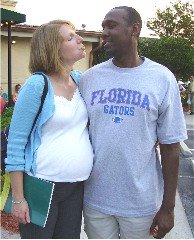
Our first grandchild is about to be born. Hannah is in the hospital, Donny's taking great care of her and he's so excited to be a Dad. Any moment Sarah's and my first grandchild will be born. You can fellow a long in my joy today on this blog.
Monday, May 08, 2006
Sex, Money, and Power: What I'd like to say to the class of 2006
No one has invited me to speak at a graduation ceremony this year but if they did here’s what I’d say.
Ladies and gentlemen of the class of 2006, I skipped my two college graduation ceremonies because I had already spent enough time in class being bored. I assume you too have spent enough time listening to boring speakers so I’m going to address three attention-getting topics--sex, money, and power.
Only, I’m going to reverse the order and talk about sex last because I want to keep you and the administration on the edges of your seat.
Oh, yes, and as a bonus I’m going to talk about God too. I’m not sure what’s going to make the administration more nervous, me talking about sex or me talking about God.
But first money. Money is like water. You can only drink so much water in a day and you only need to spend so much money in a day. Drink 729 glasses of water in a day and you die. My basic attitude towards money is that the less you spend the less you have to earn which gives you more time for the important things in life like smiling at people.
Of course, if you stop drinking water you die too. So make a little, spend a little. That’s all you need to know about money.
All you need to know about power you can learn by becoming a parent. Give a newborn what she needs--warmth, food, touch, drink, and a clean diaper--and she grows. Now that’s power. But it’s usually not that simple. Often your new baby screams and you have no clue why. Here is your first lesson in power: people in power often do not know what to do. You turn to your husband or wife as your baby screams and you say, “What do we do now?” Here is your second lesson in power: people in power figure it out as they go.
Parents, be sure to thank your graduates. Not for making it through school but for the 729 lessons in good uses of power that they have given you.
Moving on to God. One day in 1956 when my Grandma was 53 she was reading the newspaper when she saw a story about a young mother in Grygla, the nearest town, who had died, leaving a husband, Elton Anderson, and two young girls, ages five and seven.
Grandma turned to Grandpa and said, “Oh, Emil, wouldn’t I just love to take care of those girls.”
A week later Grandpa, who was 20 years older than Grandma, had a stroke and died. A couple of weeks later Elton Anderson called Grandma and asked her to move to Grygla and take care of his two girls, Mayvonne and Donna. Many years later when Grandma told me this story she said, “God put those girls on my heart because he knew I was going to need something to do after Emil died.”
Graduates, a higher power has need of you.
Now, as promised, here’s what I have to say about sex. In the movie, Vanilla Sky, the Cameron Diaz character says to the Tom Cruise character, “Don't you know that when you sleep with someone, your body makes a promise whether you do or not?”
Graduates, get married and keep your promises.
Thank you very much, class of 2006, it’s been a pleasure.
Wednesday, May 03, 2006
Fixing people
Stop trying to fix them.
That was a subhead in Yona Lunken's e-letter that I received this morning. He went on to say, "As a culture we keep thinking that if we just point out someone’s weakness and then give them training for that weakness, they will be fixed. This just doesn’t happen."
As an undergraduate I studied social work and then earned a Master's degree in counseling. You could say I was interesated in fixing people. I didn't think training would fix people but I was focused on people's weaknesses and I thought counseling would fix people.
I'm not against counseling. People close to me have benefitted greatly from therapy.
Yet on my own journey I have begun to appreciate how each of us is a unique combination of strengths and weaknesses. I don't spend a lot of time trying to fix my body so that I can walk long distances. Instead I hop in my wheelchair (well, not exactly hop--smile) and get busy doing the things I'm good at.
As Yona says, "Rather than trying to fix someone, find a way to diminish or ameliorate the effects of their weakness so that their talents can shine."
That's the wonder of families and workplaces. In groups our strengths and weaknesses fit together to create a beautiful mosaic.
I'm not talking about adultery or theft--those are mloral failures, not weaknesses. When I talk about weaknesses and strengths I'm talking about things like I am a pretty good writer and pretty lousy at keeping my office in order.
Our weaknesses naturally create space for other people's strengths.
You can subscribe to Yona's free ''Thinking Skills Seminars Newsletter'' by e-mailing him at thinking@a5.com.
(By the way, can anyone tell me how to create a link for an e-mail address in blogger so that the reader can click on the e-mail address and go directly to their e-mail program with the address inserted in the "To:" box?)
That was a subhead in Yona Lunken's e-letter that I received this morning. He went on to say, "As a culture we keep thinking that if we just point out someone’s weakness and then give them training for that weakness, they will be fixed. This just doesn’t happen."
As an undergraduate I studied social work and then earned a Master's degree in counseling. You could say I was interesated in fixing people. I didn't think training would fix people but I was focused on people's weaknesses and I thought counseling would fix people.
I'm not against counseling. People close to me have benefitted greatly from therapy.
Yet on my own journey I have begun to appreciate how each of us is a unique combination of strengths and weaknesses. I don't spend a lot of time trying to fix my body so that I can walk long distances. Instead I hop in my wheelchair (well, not exactly hop--smile) and get busy doing the things I'm good at.
As Yona says, "Rather than trying to fix someone, find a way to diminish or ameliorate the effects of their weakness so that their talents can shine."
That's the wonder of families and workplaces. In groups our strengths and weaknesses fit together to create a beautiful mosaic.
I'm not talking about adultery or theft--those are mloral failures, not weaknesses. When I talk about weaknesses and strengths I'm talking about things like I am a pretty good writer and pretty lousy at keeping my office in order.
Our weaknesses naturally create space for other people's strengths.
You can subscribe to Yona's free ''Thinking Skills Seminars Newsletter'' by e-mailing him at thinking@a5.com.
(By the way, can anyone tell me how to create a link for an e-mail address in blogger so that the reader can click on the e-mail address and go directly to their e-mail program with the address inserted in the "To:" box?)
Monday, May 01, 2006
Living in a marketing world
Lately I've been meditating on Jesus of Nazareth's manifesto, aka the sermon on the mount. This morning a phrase caught my attention: "Where your treasure is, there your heart is also."
Where is my treasure?
Like most folks in the USA I live in a marketing world, a world that treasures things, experiences, security. etc. Looking around the room where I write this I can see well over 100 things that were made and marketed (lots of books).
At the moment I don't see what I treasure most--God and his people.
Yesterday after Plow Creek worship and our common lunch three little girls, Kora Behrens, Margret Moore, and Isa Newhouse climbed on me and my wheelchair and took a ride. I treasure the children of Plow Creek.
Lately I have been meeting with Bethany Davis, a young mother of three who moved to Plow Creek from Hawaii last August after her husband died. A stay-at-home Mom with a high school education, she is exploring where she fits in the world of work. I encouraged her to attend Evergreen Leaders recent workshop--The Listening Path--that helps people identify their talents.
During the Listening Path I ask particpants identify seven things there brain loves to do--recurring patterns of thought, feeling or behavior.
After the workshop I asked Bethany about her list of seven things her brain loves to do. Two themes emerged. Her brain loves facts and ideas and her brain loves to meet new people and to have new experiences. After we had talked a few minutes I asked her, "Have you ever considered doing marketing?" She was appalled at the idea. She saw marketing as equivalent to high pressure sales.
To give her a broader picture I gave her a couple of other examples of marketing. Kevin Behrens, a shy guy and the opposite of a high pressure, fast-talking salse person, does a great job of marketing Plow Creek Farm produce.
Kevin does everything from writing and producing the farm newsletter, taking photos, managing the farm website and during the growing season, he does the daily phone message updates. In the last couple years he has created a great relationship with Natural Direct, a new home delivery produce distributor in the western Chicago suburbs, making it possible for folks in the western suburbs to enjoy locally grown Plow Creek produce. He also creates the signs and the layout for our local self-service produce market.
Then I described to Bethany all the marketing I do for Evergreen Leaders, a nonprofit company I head that does leadership workshops and consulting to help nonprofits thrive in towns under 10,000.
As Bethany and I talked about the marketing I do for EGL Bethany kept coming up with ways to improve EGL's marketing.
"Bethany, you have a marketing brain," I said.
Last week Bethany committed to starting as a vounteer marketer for EGL. I've committed to spend time with her each week supplementing her raw talent for marketing with knowledge about how to market EGL. Also, she is going to take marketing classes at the local community college.
I treasure giving Bethany the opportunity to develop her marketing talent. One of the places I love to put my treasure is in helping people develop the talents God knit into them starting in the womb.
Where is my treasure?
Like most folks in the USA I live in a marketing world, a world that treasures things, experiences, security. etc. Looking around the room where I write this I can see well over 100 things that were made and marketed (lots of books).
At the moment I don't see what I treasure most--God and his people.
Yesterday after Plow Creek worship and our common lunch three little girls, Kora Behrens, Margret Moore, and Isa Newhouse climbed on me and my wheelchair and took a ride. I treasure the children of Plow Creek.
Lately I have been meeting with Bethany Davis, a young mother of three who moved to Plow Creek from Hawaii last August after her husband died. A stay-at-home Mom with a high school education, she is exploring where she fits in the world of work. I encouraged her to attend Evergreen Leaders recent workshop--The Listening Path--that helps people identify their talents.
During the Listening Path I ask particpants identify seven things there brain loves to do--recurring patterns of thought, feeling or behavior.
After the workshop I asked Bethany about her list of seven things her brain loves to do. Two themes emerged. Her brain loves facts and ideas and her brain loves to meet new people and to have new experiences. After we had talked a few minutes I asked her, "Have you ever considered doing marketing?" She was appalled at the idea. She saw marketing as equivalent to high pressure sales.
To give her a broader picture I gave her a couple of other examples of marketing. Kevin Behrens, a shy guy and the opposite of a high pressure, fast-talking salse person, does a great job of marketing Plow Creek Farm produce.
Kevin does everything from writing and producing the farm newsletter, taking photos, managing the farm website and during the growing season, he does the daily phone message updates. In the last couple years he has created a great relationship with Natural Direct, a new home delivery produce distributor in the western Chicago suburbs, making it possible for folks in the western suburbs to enjoy locally grown Plow Creek produce. He also creates the signs and the layout for our local self-service produce market.
Then I described to Bethany all the marketing I do for Evergreen Leaders, a nonprofit company I head that does leadership workshops and consulting to help nonprofits thrive in towns under 10,000.
As Bethany and I talked about the marketing I do for EGL Bethany kept coming up with ways to improve EGL's marketing.
"Bethany, you have a marketing brain," I said.
Last week Bethany committed to starting as a vounteer marketer for EGL. I've committed to spend time with her each week supplementing her raw talent for marketing with knowledge about how to market EGL. Also, she is going to take marketing classes at the local community college.
I treasure giving Bethany the opportunity to develop her marketing talent. One of the places I love to put my treasure is in helping people develop the talents God knit into them starting in the womb.
Saturday, April 22, 2006
The world's only diamond willow headboard maker
When Dad, who lives in northern Minnesota, was 79, a stranger stopped and asked him if there were any diamond willows growing in the area.
Dad didn't know. He had never heard of diamond willows. The man showed Dad some beautiful walking sticks he had made out of diamond willows.
Dad researched diamond willows on the Internet and then went looking for them. He discovered lots of diamond willows near our farm. "I've probably been walking by them since I was five years old and never knew they were there," he says.
Now Dad is 82, a man with his own diamond willow business and website, Foss Diamond Willows, and someone who is having more fun working than ever before. In fact, recently he told me, "Life begins at 80."
While I've been launching Evergreen Leaders, discovering how to create a nonprofit that can help other nonprofits thrive, Dad has been discovering how to create a thriving business.
When the board and I launched Evergreen Leaders we focused on developing leadership workshops for nonprofit staff. Recently we have added strategic planning and fund raising consulting services in addition to the workshops.
Dad began making diamond willow walking sticks and lamps and marketing them at craft shows. But he kept looking for bigger ticket items that he could make from diamond willows.
After he made a diamond willow bed a couple of people suggested that he make diamond willow headboards. When a customer happily paid $500 for a diamond willow headboard, that got Dad's attention.
Now he has created diamond willow headboards for every size of bed. As he's shown them to customers he's dicovered that his customers see the diamond willow headboards as a perfect addition to their lake homes.
I'm proud of my Dad--the world's first maker of diamond willow headboards.
Dad didn't know. He had never heard of diamond willows. The man showed Dad some beautiful walking sticks he had made out of diamond willows.
Dad researched diamond willows on the Internet and then went looking for them. He discovered lots of diamond willows near our farm. "I've probably been walking by them since I was five years old and never knew they were there," he says.
Now Dad is 82, a man with his own diamond willow business and website, Foss Diamond Willows, and someone who is having more fun working than ever before. In fact, recently he told me, "Life begins at 80."
While I've been launching Evergreen Leaders, discovering how to create a nonprofit that can help other nonprofits thrive, Dad has been discovering how to create a thriving business.
When the board and I launched Evergreen Leaders we focused on developing leadership workshops for nonprofit staff. Recently we have added strategic planning and fund raising consulting services in addition to the workshops.
Dad began making diamond willow walking sticks and lamps and marketing them at craft shows. But he kept looking for bigger ticket items that he could make from diamond willows.
After he made a diamond willow bed a couple of people suggested that he make diamond willow headboards. When a customer happily paid $500 for a diamond willow headboard, that got Dad's attention.
Now he has created diamond willow headboards for every size of bed. As he's shown them to customers he's dicovered that his customers see the diamond willow headboards as a perfect addition to their lake homes.
I'm proud of my Dad--the world's first maker of diamond willow headboards.
Sunday, April 16, 2006
A thousand mouths
This week I wrote a poem for the Easter sun rise service Erin Kindy and I lead this morning.
Here's a bit of background on the poem. This week the Plow Creek farmers planted strawberries. They order the plants from a distributor in Indiana who purchases them from a grower in California. The plants are refrigerated until it's time to plant them.
We sell a lot of strawberries each June. Last year Kevin Behrens, who does our marketing, said that by the end of the season he felt like he was pushing tons strawberries into people.
Of course, the poem has several Biblical allusions as well. Erin and I used Jesus' metaphor about his death and resurrection in the call to worship:
I tell you, unless a grain of wheat falls into the earth and dies, it remains just a single grain; but if it dies, it bears much fruit.
In the last part of the poem I use the metaphor of tasting drawn the phrase in the psalm, "taste and see that the Lord is good."
A Thousand Mouths
By Rich Foss
Tender Plow Creek hands
lifted little green shoots
from a refrigerator this holy week,
hands like those of a rich man from Aramathia
tenderly wrapping a body
and hefting it into a rocky tomb.
Ah, the grief of a single grain of wheat
clinging to life.
Hand and machine ripped open the field--
now strawberry shoots dwell
in Plow Creek soil,
roots caressed by earth.
A body housed in hewn rock,
lifeless, breathless,
three days of stillness
before the startle.
June is coming when earth and plant
fling tons of strawberries into the air,
succulent to a thousand mouths.
He is risen,
tasting with a thousand generations
the raw goodness of resurrection.
Here's a bit of background on the poem. This week the Plow Creek farmers planted strawberries. They order the plants from a distributor in Indiana who purchases them from a grower in California. The plants are refrigerated until it's time to plant them.
We sell a lot of strawberries each June. Last year Kevin Behrens, who does our marketing, said that by the end of the season he felt like he was pushing tons strawberries into people.
Of course, the poem has several Biblical allusions as well. Erin and I used Jesus' metaphor about his death and resurrection in the call to worship:
I tell you, unless a grain of wheat falls into the earth and dies, it remains just a single grain; but if it dies, it bears much fruit.
In the last part of the poem I use the metaphor of tasting drawn the phrase in the psalm, "taste and see that the Lord is good."
A Thousand Mouths
By Rich Foss
Tender Plow Creek hands
lifted little green shoots
from a refrigerator this holy week,
hands like those of a rich man from Aramathia
tenderly wrapping a body
and hefting it into a rocky tomb.
Ah, the grief of a single grain of wheat
clinging to life.
Hand and machine ripped open the field--
now strawberry shoots dwell
in Plow Creek soil,
roots caressed by earth.
A body housed in hewn rock,
lifeless, breathless,
three days of stillness
before the startle.
June is coming when earth and plant
fling tons of strawberries into the air,
succulent to a thousand mouths.
He is risen,
tasting with a thousand generations
the raw goodness of resurrection.
Friday, March 31, 2006
Shall we dance?
This afternoon I suggested Sarah pick up a video and she came home with Shall We Dance? a remake of a Japanese film that stars Richard Gere and Jennifer Lopez. Sarah loves dance but I had my doubts. After all, I don't move well due to my disability...all I could think of was watching a movie that reminded me of my shortcomings as Sarah's man.
At first the movie confirmed my fears as Richard Gere secretly pursues ballroom dancing lessons, unable to reveal that side of himself to his wife. Does Sarah secretly wish she could dance with someone who could move freely?
But then to my astonishment the movie flows into powerfully affirmation Richard Gere's marriage. At one point Peter Gabriel's "The Book of Love" was playing in the background and tears were welling up in my eyes:
Sarah, my heart is a ballroom for you. Shall we dance?
At first the movie confirmed my fears as Richard Gere secretly pursues ballroom dancing lessons, unable to reveal that side of himself to his wife. Does Sarah secretly wish she could dance with someone who could move freely?
But then to my astonishment the movie flows into powerfully affirmation Richard Gere's marriage. At one point Peter Gabriel's "The Book of Love" was playing in the background and tears were welling up in my eyes:
The book of love is long and boring...
The book of love has music in it
In fact that's where music comes from
Some of it is just transcendental
Some of it is just really dumb
But I
I love it when you sing to me
And you
You can sing me anything
The book of love has music in it
In fact that's where music comes from
Some of it is just transcendental
Some of it is just really dumb
But I
I love it when you sing to me
And you
You can sing me anything
Sarah, my heart is a ballroom for you. Shall we dance?
Wednesday, March 29, 2006
Sometimes life is as brutal...
Sometimes when I need a break I wander the web. This afternoon I wandered to Kevin Rains' blog and discovered that Mark Palmer died.
I don't know Mark Palmer. I only know he's a friend of Kevin's and he had cancer. I clicked on Kevin's link to Mark Palmer's blog. Mark's last post was 3/25/06. He talked about celebrating his four year-old son Micah's birthday.
His wife has written three entries since his death, starting on 3/27/06 with: My lover is gone...
Sometimes life is as brutal as an eagle swooping over a rabbit.
Mark's last words in his blog were to his son, Micah, who is named after the prophet:
Happy birthday little prophet, may you be filled with the blessings of peace, hope, and love.
Sometimes life is as tearing and tender as the blessing of a dying man.
I don't know Mark Palmer. I only know he's a friend of Kevin's and he had cancer. I clicked on Kevin's link to Mark Palmer's blog. Mark's last post was 3/25/06. He talked about celebrating his four year-old son Micah's birthday.
His wife has written three entries since his death, starting on 3/27/06 with: My lover is gone...
Sometimes life is as brutal as an eagle swooping over a rabbit.
Mark's last words in his blog were to his son, Micah, who is named after the prophet:
Happy birthday little prophet, may you be filled with the blessings of peace, hope, and love.
Sometimes life is as tearing and tender as the blessing of a dying man.
Friday, March 24, 2006
Laughing and weeping
Yesterday morning, as I have done for months, I prayed for the Christian Peacemaker Team members being held in Baghdad. At first I prayed for four, then three after Tom Fox's body was found a couple weeks ago.
When I was done with my quiet time I turned on my computer and my Inside Yahoo! screen popped up declaring the CPTers had been freed. What great joyful news.
Later Erin Kindy, one of our church members who is active in CPT came over and we rejoiced together that the three CPTers were released without a bullet being fired. Talk about an answer to many prayers.
As the news has unfolded in the day since they have been released the three who were from Canada and Britain indicated that they had not been mistreated while in captivity.
That likely means that Tom Fox was tortured and killed for being an American. People get upset when their country is invaded.
That reminds me of fifteen months ago when I was in the Miami area between Christmas and New Years. One day my wife and daughters decided to visit a huge mall. I stayed in the van to snooze but soon found myself in a conversation with a New York building contractor who divided his time between New York and Florida.
"I wish I could sit down with President Bush," he said. "I'd tell him he has blood on his hands."
When you listen to people, even strangers, you hear interesting things.
On the news last night a newscaster said that CPT does not use security so they were easy targets for kidnapping.
Tom Fox was a sacrificial lamb for the blood on American hands. Of course, some Iraqis have his blood on their hands too.
Bullets fly in circles, bloodying the hands of those who pull the trigger. A wise friend of mine once said, "They that live by the sword, die by the sword."
I take quiet pleasure in knowing the Christian Peacemaker Teams will not bloody any of the Swords of Righteousness Brigade who took Tom Fox and the other CPTers.
When I was done with my quiet time I turned on my computer and my Inside Yahoo! screen popped up declaring the CPTers had been freed. What great joyful news.
Later Erin Kindy, one of our church members who is active in CPT came over and we rejoiced together that the three CPTers were released without a bullet being fired. Talk about an answer to many prayers.
As the news has unfolded in the day since they have been released the three who were from Canada and Britain indicated that they had not been mistreated while in captivity.
That likely means that Tom Fox was tortured and killed for being an American. People get upset when their country is invaded.
That reminds me of fifteen months ago when I was in the Miami area between Christmas and New Years. One day my wife and daughters decided to visit a huge mall. I stayed in the van to snooze but soon found myself in a conversation with a New York building contractor who divided his time between New York and Florida.
"I wish I could sit down with President Bush," he said. "I'd tell him he has blood on his hands."
When you listen to people, even strangers, you hear interesting things.
On the news last night a newscaster said that CPT does not use security so they were easy targets for kidnapping.
Tom Fox was a sacrificial lamb for the blood on American hands. Of course, some Iraqis have his blood on their hands too.
Bullets fly in circles, bloodying the hands of those who pull the trigger. A wise friend of mine once said, "They that live by the sword, die by the sword."
I take quiet pleasure in knowing the Christian Peacemaker Teams will not bloody any of the Swords of Righteousness Brigade who took Tom Fox and the other CPTers.
Monday, March 13, 2006
Grieving Tom Fox
I am mourning the death of Tom Fox, a Christian Peacemaker Team member whose body was found last Thursday in Baghdad, bound with gunshots to the head.
Plow Creek has sent three of our members to Colombia and Hebron to serve with CPT, and the father of one of our members, Erin Kindy, has spent much time in Iraq with the CPT team there.
So this news story is more than a news story.
It also hits close to home because my wife's father went to Ethiopia in 1950 as a missionary and was shot and killed.
People who go to dangerous places out of obedience to the Lord sometimes are killed and family and friends are left behind to grieve.
Remarkably, the day before he was taken captive, Tom Fox wrote a reflection on why he and CPT are in Iraq.
Three CPTers are still being held captive. Lord have mercy on they and their captors.
Plow Creek has sent three of our members to Colombia and Hebron to serve with CPT, and the father of one of our members, Erin Kindy, has spent much time in Iraq with the CPT team there.
So this news story is more than a news story.
It also hits close to home because my wife's father went to Ethiopia in 1950 as a missionary and was shot and killed.
People who go to dangerous places out of obedience to the Lord sometimes are killed and family and friends are left behind to grieve.
Remarkably, the day before he was taken captive, Tom Fox wrote a reflection on why he and CPT are in Iraq.
Three CPTers are still being held captive. Lord have mercy on they and their captors.
Thursday, March 02, 2006
What's wrong with employer-based healthcare?
Six years ago Malcolm Gladwell author of Blink and Turning Point debated a proponent of the Canadian system of healthcare.
Galdwell has changed his mind. He now says that employer-based healthcare makes about as much sense as employer-based transportation. You know, if you lived in New York and lost your job "you would either have to walk or pay a prohibitively expensive subway surcharge."
Check out his blog.
Galdwell has changed his mind. He now says that employer-based healthcare makes about as much sense as employer-based transportation. You know, if you lived in New York and lost your job "you would either have to walk or pay a prohibitively expensive subway surcharge."
Check out his blog.
Thursday, February 02, 2006
Evergreen Leaders Drill Down 6
My brain is still working on simple, powerful words and concepts to create a clear focus for EGL.
For the last couple of years I've often said to people that EGL provides leadership training to people who would not otherwise have access to it. When I've said that I was thinking about people in small nonprofits, small business, etc. A couple days ago it occured to me that people in leadership and management in small towns--whether they are small businesses, nonprofits, public sector, or churches--do not have access to leadership seminars in their towns at an affordable cost. So here's EGL mission version 6:
EGL helps
• nonprofits, small businesses, govermental units, and churches in towns under 10,000
• to be great workplaces
• and to transform the lives of service recipients.
For the last couple of years I've often said to people that EGL provides leadership training to people who would not otherwise have access to it. When I've said that I was thinking about people in small nonprofits, small business, etc. A couple days ago it occured to me that people in leadership and management in small towns--whether they are small businesses, nonprofits, public sector, or churches--do not have access to leadership seminars in their towns at an affordable cost. So here's EGL mission version 6:
EGL helps
• nonprofits, small businesses, govermental units, and churches in towns under 10,000
• to be great workplaces
• and to transform the lives of service recipients.
Tuesday, January 31, 2006
Evergreen Leaders Drill Down 5
I'm still trying to drill deep enough to find simple words to describe what EGL is trying to achieve. Every business and nonprofit exists to make life better for somebody. Whose lives is EGL trying to make better? What will happen when lives are been touched by EGL?
I'm looking for a way to describe EGL's mission so that excitement flows like an artesian well for all connected with EGL.
Here's another version:
EGL helps
• companies (nonprofit and for profit) that employ service people for $12 an hour or less
• to be great workplaces and to transform the lives of service recipients
• at a cost comparable to national firms providing management seminars to small businesses and nonprofits.
Now I think I am really close to pay dirt.
I'm looking for a way to describe EGL's mission so that excitement flows like an artesian well for all connected with EGL.
Here's another version:
EGL helps
• companies (nonprofit and for profit) that employ service people for $12 an hour or less
• to be great workplaces and to transform the lives of service recipients
• at a cost comparable to national firms providing management seminars to small businesses and nonprofits.
Now I think I am really close to pay dirt.
Talents and laughter
Among Rick Reha's talents is eclectic reading--science fiction, theology, art history, music instrument making publications, and much more.
Talent, according to the Gallup Organization research, is "a recurring pattern of thought, feeling or behavior that can be productively applied."
Here's how Rick recently applied his talent for reading. He recently read Holy Humor by Cal Samra. He passed the book along to Jim Fitz.
Jim, when he's not traveling as part of his peace-making ministry stays three night's a week with Jim and Donna Harnish, Plow Creek's most senior members. He brought ''Holy Humor'' with him to Harnishes'. He leaves the book there and each evening he stays with the Harnishes he reads to Jim.
Fitz has a talent for connecting with people. "It's more fun reading a humor book with someone. When I read the book to Jim he often has funny stories to tell," he says.
Getting old gracefully is not for the faint of heart. Donna had a stroke seven or eight years ago and has not been able to speak or walk since. Jim and others at Plow Creek have faithfully cared for her since her stroke. Now Jim H.'s health has deteriorated to the point where he can no longer drive and he mostly uses a wheelchair to get around their apartment.
Still he's a great conversationalist. He enjoys discussing the politics of hope for the poor, telling stories, and laughing at the occasional absurdity of life.
When I'm old and can't get out and about I'm looking forward to people sharing talents, moments of absurdity, and laughter with me.
Talent, according to the Gallup Organization research, is "a recurring pattern of thought, feeling or behavior that can be productively applied."
Here's how Rick recently applied his talent for reading. He recently read Holy Humor by Cal Samra. He passed the book along to Jim Fitz.
Jim, when he's not traveling as part of his peace-making ministry stays three night's a week with Jim and Donna Harnish, Plow Creek's most senior members. He brought ''Holy Humor'' with him to Harnishes'. He leaves the book there and each evening he stays with the Harnishes he reads to Jim.
Fitz has a talent for connecting with people. "It's more fun reading a humor book with someone. When I read the book to Jim he often has funny stories to tell," he says.
Getting old gracefully is not for the faint of heart. Donna had a stroke seven or eight years ago and has not been able to speak or walk since. Jim and others at Plow Creek have faithfully cared for her since her stroke. Now Jim H.'s health has deteriorated to the point where he can no longer drive and he mostly uses a wheelchair to get around their apartment.
Still he's a great conversationalist. He enjoys discussing the politics of hope for the poor, telling stories, and laughing at the occasional absurdity of life.
When I'm old and can't get out and about I'm looking forward to people sharing talents, moments of absurdity, and laughter with me.
Tuesday, January 24, 2006
A better way than "guilty victim"
Even though pastors and leaders have power they sometimes feel powerless. Watch out when leaders feel powerless because they tend to notch up the power of their actions to overcome their feelings of powerlessness and people get hurt.
But there's a better way to deal with feelings of powerlessness.
Take me. On Saturday I was part of an all day retreat of the communal group I belong to--Plow Creek Fellowship. Late in the day I said something and another person disagreed with me. Of course, I thought my idea was great and would benefit the group. That's what leaders tend to think about their thinking (:lol:).
It wasn't the time or the place for us to work out the disagreement. Later I found myself still fretting about the exchange. "No matter what I say," I thought, "he's going to disagree with me."
Even as I thought that I knew it made no sense. After all, earlier in the day I had said something and the same person had strongly agreed with me.
When I start making mental blanket negative statements about another person I know it's usually a carry over from another experience, often a childhood experience.
On Sunday morning in my quiet time I said, "Okay, Lord, where did this idea that no matter what I say I'm going to be opposed come from"
I immediately thought of an incident with my younger sister. We were out playing or working and I did something that upset her. I don't remember what it was but I remember her response. "I'm going to call the sheriff on you," she screamed, "because you are the guilty victim."
Ah yes, I thought, my little sister was feeling powerless and she wanted to get the sheriff on her side to to overpower me.
Since I've been a pastor and leader for most of my adult life I've often had people "yell" at me because I have so much power and they feel they have so little that they need to "yell" to be heard.
Then I end up feeling like the "guilty victim." I feel guilty because the person was hurt or frightened by my leadership. When I have wronged a person in my pastoral role, it actually makes it easier because I can apologize and take responsibility.
But I feel like a guilty victim when I offer my best as a leader and someone feels threatened and in fear of being overpowered "yells" at me and looks for a "sheriff" to overpower me.
Okay, Jesus, you must have a better way of seeing the situation with my sister and similar situations.
Immediately I sensed Jesus says, "Richard, you are an innocent equal and you should lay down your life for others."
That's given me something to ponder for several days.
But there's a better way to deal with feelings of powerlessness.
Take me. On Saturday I was part of an all day retreat of the communal group I belong to--Plow Creek Fellowship. Late in the day I said something and another person disagreed with me. Of course, I thought my idea was great and would benefit the group. That's what leaders tend to think about their thinking (:lol:).
It wasn't the time or the place for us to work out the disagreement. Later I found myself still fretting about the exchange. "No matter what I say," I thought, "he's going to disagree with me."
Even as I thought that I knew it made no sense. After all, earlier in the day I had said something and the same person had strongly agreed with me.
When I start making mental blanket negative statements about another person I know it's usually a carry over from another experience, often a childhood experience.
On Sunday morning in my quiet time I said, "Okay, Lord, where did this idea that no matter what I say I'm going to be opposed come from"
I immediately thought of an incident with my younger sister. We were out playing or working and I did something that upset her. I don't remember what it was but I remember her response. "I'm going to call the sheriff on you," she screamed, "because you are the guilty victim."
Ah yes, I thought, my little sister was feeling powerless and she wanted to get the sheriff on her side to to overpower me.
Since I've been a pastor and leader for most of my adult life I've often had people "yell" at me because I have so much power and they feel they have so little that they need to "yell" to be heard.
Then I end up feeling like the "guilty victim." I feel guilty because the person was hurt or frightened by my leadership. When I have wronged a person in my pastoral role, it actually makes it easier because I can apologize and take responsibility.
But I feel like a guilty victim when I offer my best as a leader and someone feels threatened and in fear of being overpowered "yells" at me and looks for a "sheriff" to overpower me.
Okay, Jesus, you must have a better way of seeing the situation with my sister and similar situations.
Immediately I sensed Jesus says, "Richard, you are an innocent equal and you should lay down your life for others."
That's given me something to ponder for several days.
Monday, January 23, 2006
Evergreen Leaders Drill Down 4
Again using Caver's approach for nonprofit boards, here's an end statement for Evergreen Leaders:
EGL helps
• nonprofits employing direct service professionals for under $12 an hour
• to be great workplaces and to transform the lives of service recipients
• at a cost comparable to national firms providing management seminars to nonprofits.
I'm still contemplating the third bullet. It's an attempt to answer the question, "At what cost will EGL provide the services?" It's easy to compare the cost of our workshops to companies like CareerTrack and Skillpath but it's not so easy to compare board training and consulting, two other services EGL provides to nonprofits. I'll have to do more research.
EGL helps
• nonprofits employing direct service professionals for under $12 an hour
• to be great workplaces and to transform the lives of service recipients
• at a cost comparable to national firms providing management seminars to nonprofits.
I'm still contemplating the third bullet. It's an attempt to answer the question, "At what cost will EGL provide the services?" It's easy to compare the cost of our workshops to companies like CareerTrack and Skillpath but it's not so easy to compare board training and consulting, two other services EGL provides to nonprofits. I'll have to do more research.
Tuesday, January 17, 2006
Evergreen Leaders drill down 3
I continue to ponder Evergreen Leaders function and form--thanks for raising the issue, Tutuk. Here's another drill down:
'EGL gives
• nonprofit organizations that employ direct service professionals for under $10 an hour
• the tools to be a great workplace and to transform the lives of service recipients
• at a cost comparable to national firms that provide management seminars to small businesses and nonprofits.''
Thanks to John Carver who says nonprofit boards ought to set expectations for success by defining the purpose of the organizations in three areas:
• results
• for which recipients
• at what worth.
'EGL gives
• nonprofit organizations that employ direct service professionals for under $10 an hour
• the tools to be a great workplace and to transform the lives of service recipients
• at a cost comparable to national firms that provide management seminars to small businesses and nonprofits.''
Thanks to John Carver who says nonprofit boards ought to set expectations for success by defining the purpose of the organizations in three areas:
• results
• for which recipients
• at what worth.
Monday, January 16, 2006
Evergreen Leaders drill down 2
Since yesterday I've continued to ponder who is Evergreen Leaders audience and what changes do we offer them. Let's try this one on:
EGL gives nonprofit organizations that employ direct service professionals for under $10 an hour the tools to be a great workplace that transforms the lives of service recipients.
EGL gives nonprofit organizations that employ direct service professionals for under $10 an hour the tools to be a great workplace that transforms the lives of service recipients.
Sunday, January 15, 2006
Evergreen Leaders drill down 1
Hmmm. It's been three weeks since I did a post.
I've been thinking about using my blog to drill down deep to the core of Evergreen Leaders. In my December 13 entry I told the story of EGL board member Tutuk Horning holding up a flower at the November EGL board meeting and saying, "I do not know how to describe the form and function of Evergreen Leaders."
Evergreen Leaders has a mission, "To give ordinary people the tools to help their groups thrive." But that's too vague. It doesn't describe the form and the function. Ordinary people is a little too broad. There are a lot of ordinary people in the world. Groups is a little too broad. There are a lot of groups in this world.
So let's drill down and see if we can discover gold--the form and function of Evergreen Leaders.
Let's start drilling by looking at who we are helping--ordinary people. I'm thinking about the people who are the lowest on the rung in businesses and nonprofits.
That's too broad also. Let's talk about the people who are on the lowest rung in nonprofits that provide services to the elderly and people with developmental services.
That's too broad too because that means we are aiming at two fields--the industry that cares for people with developmental disabilities and the eldercare field. In business terms that two industries.
It's so hard for me to choose one of those fields. Since I have the most experience with field that provides services to people with developmental disabilities, it makes most sense that we focus there. Also, we have two board membes who work in that field.
For the time being, let's assume we are going to focus on nonprofits who provide services to adults with developmental disabilities.
The next question: What function will we provide to the developmental disabilities field? What do they need that we can provide?
Okay, let me do a first draft: Our function will be to provide educatioanl tools that will make it possible for front line managers and workers to thrive on the job.
Ok. That's enough for tonight. It's a start. Now I need to get people to make comments and help with this Evergreen Leaders drill down.
I've been thinking about using my blog to drill down deep to the core of Evergreen Leaders. In my December 13 entry I told the story of EGL board member Tutuk Horning holding up a flower at the November EGL board meeting and saying, "I do not know how to describe the form and function of Evergreen Leaders."
Evergreen Leaders has a mission, "To give ordinary people the tools to help their groups thrive." But that's too vague. It doesn't describe the form and the function. Ordinary people is a little too broad. There are a lot of ordinary people in the world. Groups is a little too broad. There are a lot of groups in this world.
So let's drill down and see if we can discover gold--the form and function of Evergreen Leaders.
Let's start drilling by looking at who we are helping--ordinary people. I'm thinking about the people who are the lowest on the rung in businesses and nonprofits.
That's too broad also. Let's talk about the people who are on the lowest rung in nonprofits that provide services to the elderly and people with developmental services.
That's too broad too because that means we are aiming at two fields--the industry that cares for people with developmental disabilities and the eldercare field. In business terms that two industries.
It's so hard for me to choose one of those fields. Since I have the most experience with field that provides services to people with developmental disabilities, it makes most sense that we focus there. Also, we have two board membes who work in that field.
For the time being, let's assume we are going to focus on nonprofits who provide services to adults with developmental disabilities.
The next question: What function will we provide to the developmental disabilities field? What do they need that we can provide?
Okay, let me do a first draft: Our function will be to provide educatioanl tools that will make it possible for front line managers and workers to thrive on the job.
Ok. That's enough for tonight. It's a start. Now I need to get people to make comments and help with this Evergreen Leaders drill down.
Sunday, December 25, 2005
One more holy night
Last night we gathered in a plain room, sang Christmas carols, prayed and listened to scripture readings.
It was the Plow Creek Christmas Eve service, an annual event that brings together those of us who are not traveling to see family and those of us who traveled to Plow Creek to see family.
We sat in a rough circle of folding chairs. On a small table in the center of the room a single white Christ candle burned.
As we sang about a baby being born the candle flickered.
Sarah read, "The true light that gives light to every man was coming into the world".
We sat there crazy enough to believe and sing about God shrinking from creator of the universe to a baby.
As we sang the Christ candle burned.
Then Emily Fitz, home from physician's assistant school in California, handed out candles and we formed one large circle around the room. Someone dimmed the lights until the candle at the center was the bright.
Then Louise Stahnke, who led worship, lit her candle from the Christ candle in the middle of the room. Then she lit two other people's candles who each lit the candle of a person next to them.
Rick Reha started us singing "Silent Night, Holy Night."
As we sang, slowly the fire and light from the Christ candle passed from candle to candle along each side of the circle.
Five year-old Helen Moore with long brown hair and churubic face stood next to me. When her candle was lit she turned and solemnly lit my candle. Then I turned and lit Sarah's candle.
We sang cheerfully, gratefully, believing that this baby, born oh so long ago, became a man who passed on such powerful love from his Dad in heaven that it is possible for us to love one another...and even our enemies.
The darkness did not have a chance. As we sang the room filled with flickering candle light.
It was the Plow Creek Christmas Eve service, an annual event that brings together those of us who are not traveling to see family and those of us who traveled to Plow Creek to see family.
We sat in a rough circle of folding chairs. On a small table in the center of the room a single white Christ candle burned.
As we sang about a baby being born the candle flickered.
Sarah read, "The true light that gives light to every man was coming into the world".
We sat there crazy enough to believe and sing about God shrinking from creator of the universe to a baby.
As we sang the Christ candle burned.
Then Emily Fitz, home from physician's assistant school in California, handed out candles and we formed one large circle around the room. Someone dimmed the lights until the candle at the center was the bright.
Then Louise Stahnke, who led worship, lit her candle from the Christ candle in the middle of the room. Then she lit two other people's candles who each lit the candle of a person next to them.
Rick Reha started us singing "Silent Night, Holy Night."
As we sang, slowly the fire and light from the Christ candle passed from candle to candle along each side of the circle.
Five year-old Helen Moore with long brown hair and churubic face stood next to me. When her candle was lit she turned and solemnly lit my candle. Then I turned and lit Sarah's candle.
We sang cheerfully, gratefully, believing that this baby, born oh so long ago, became a man who passed on such powerful love from his Dad in heaven that it is possible for us to love one another...and even our enemies.
The darkness did not have a chance. As we sang the room filled with flickering candle light.
Thursday, December 15, 2005
Two brains
When he finished with the problems I stopped reading and checked his work. He had done the problems with 98% accuracy. Maybe he was right. Maybe he does have two brains.
When it comes to figuring out the next directions for Evergreen Leaders I am working with two brains--my spiritual brain and my other brain.
Tuesday, December 13, 2005
Pneumonia and thinking about Evergreen Leaders
In one of those strange twists of life, having a nasty case of pneumonia is giving me critical time to think about Evergreen Leaders.
What exactly is Evergreen Leaders? That question has been the essence of our conversations at the EGL September and November board meetings.
Board member Tutuk Horning, an immigrant from Indonesia, said it best at our November board meeting when she recounted an incident. Someone visiting Plow Creek asked a question about Evergreen Leaders. Someone pointed out Tutuk and said, "Ask Tutuk. She's an EGL board member."
At that point in the board meeting Tutuk said, "My English is not very good." Then she held up flower and said, "I do not know how to describe the form and function of Evergreen Leaders."
Other board members chimed in. "It's not your English, Tutuk. We don't know how to describe it either."
I listened to the conversation feeling an odd combination of gratitude and chagrin. Gratitude because Tutuk, our quietest board member, had simply and eloquently described the key issue. Like a flower, EGL needs and easily described form and function. Chagrin because after two and half years, I, who love putting concepts into words, still can't describe EGL with the simple beauty of a flower.
I take some comfort from venture capitalist Brad Feld's blog:
''One of the challenges with early stage companies is determining whether the thing you are creating is a “feature”, a “product”, or a “company”. Of ''''course everyone aspires to create “a company” and most business plans eloquently describe the $50 million company that is going to be created in ''''five years. Since that rarely occurs, early stage VCs are constantly asking “is that a feature, product, or a company?”''
Evergreen Leaders has a mission that I'm deeply passionate about: ''To give ordinary people the tools to help their groups thrive.''
We started out by creating a series of three workshops aimed at two niches--churches and nonprofits.
So far no churches have shown an interest in the workshops but non-profits have. We did the first series for a paying custmor last spring. We're taking off, I thought. Two more NPOs expressed interest and I assumed we'd be doing the series for both this fall. But then both stalled out. One of the NPOs hit a money crunch and cut staff training. The other stalled out when their board questioned the value of workshops.
While marketing EGL to another NPO CEO she told me that there is a great need for brief, three-hour, board development workshops.
That made sense to me and some of my EGL board members. Thus I began working on developing an EGL board development workshop, integrating key concepts from the EGL workshops with ideas from John Carver, the leading thinker on nonprofit boards.
Another idea that surfaced during board conversations: focus on consulting as a way to pursue the EGL mission and bring in much needed income.
No wonder all of us connected with EGL are wondering what the form and function of EGL is.
After five days in the hospital with a nasty bout of pneumonia (when my blood pressure dropped to half of normal my dear Sarah worried about my survival--I was too sick to invest much energy in worrying) I've taken off the month of December.
This is giving me time to reflect and pray about Plow Creek and Evergreen leaders matters. I think I'll use my blog to think and pray about EGL. You can follow my journey, add to my thinking through comments. and you can even pray with me.
Lord, I know you called me to launch EGL. Now help me and the board know what you have in mind for the next leg of the journey. Amen.
What exactly is Evergreen Leaders? That question has been the essence of our conversations at the EGL September and November board meetings.
Board member Tutuk Horning, an immigrant from Indonesia, said it best at our November board meeting when she recounted an incident. Someone visiting Plow Creek asked a question about Evergreen Leaders. Someone pointed out Tutuk and said, "Ask Tutuk. She's an EGL board member."
At that point in the board meeting Tutuk said, "My English is not very good." Then she held up flower and said, "I do not know how to describe the form and function of Evergreen Leaders."
Other board members chimed in. "It's not your English, Tutuk. We don't know how to describe it either."
I listened to the conversation feeling an odd combination of gratitude and chagrin. Gratitude because Tutuk, our quietest board member, had simply and eloquently described the key issue. Like a flower, EGL needs and easily described form and function. Chagrin because after two and half years, I, who love putting concepts into words, still can't describe EGL with the simple beauty of a flower.
I take some comfort from venture capitalist Brad Feld's blog:
''One of the challenges with early stage companies is determining whether the thing you are creating is a “feature”, a “product”, or a “company”. Of ''''course everyone aspires to create “a company” and most business plans eloquently describe the $50 million company that is going to be created in ''''five years. Since that rarely occurs, early stage VCs are constantly asking “is that a feature, product, or a company?”''
Evergreen Leaders has a mission that I'm deeply passionate about: ''To give ordinary people the tools to help their groups thrive.''
We started out by creating a series of three workshops aimed at two niches--churches and nonprofits.
So far no churches have shown an interest in the workshops but non-profits have. We did the first series for a paying custmor last spring. We're taking off, I thought. Two more NPOs expressed interest and I assumed we'd be doing the series for both this fall. But then both stalled out. One of the NPOs hit a money crunch and cut staff training. The other stalled out when their board questioned the value of workshops.
While marketing EGL to another NPO CEO she told me that there is a great need for brief, three-hour, board development workshops.
That made sense to me and some of my EGL board members. Thus I began working on developing an EGL board development workshop, integrating key concepts from the EGL workshops with ideas from John Carver, the leading thinker on nonprofit boards.
Another idea that surfaced during board conversations: focus on consulting as a way to pursue the EGL mission and bring in much needed income.
No wonder all of us connected with EGL are wondering what the form and function of EGL is.
After five days in the hospital with a nasty bout of pneumonia (when my blood pressure dropped to half of normal my dear Sarah worried about my survival--I was too sick to invest much energy in worrying) I've taken off the month of December.
This is giving me time to reflect and pray about Plow Creek and Evergreen leaders matters. I think I'll use my blog to think and pray about EGL. You can follow my journey, add to my thinking through comments. and you can even pray with me.
Lord, I know you called me to launch EGL. Now help me and the board know what you have in mind for the next leg of the journey. Amen.
Tuesday, November 22, 2005
Giving thanks for friends
Last week Lynn Reha from Plow Creek had to spend four days in the Chicago area for her work. She stayed with friends in the Clearing, a Reba Place Fellowship household.
Lynn's colleagues were amazed that she could stay with friends while on her business trip.
Lack of friends is a side effect of the mad American rush to succeed. Even though I've lived in a commune since 1977 I too get caught up in the rush. Yesterday I wrapped up a capital campaign feasibility study for a local nonprofit that I squeezed in this fall between being on the leadership team for our church and our communal group at Plow Creek and also serving as the one person staff for Evergreen Leaders.
This morning I've been enjoying slowing down. My first meeting is at 10:00.
Reba Place Fellowship, a communal group founded in the 1950's, sent out three couples to found Plow Creek in 1971. This week ''Christian Century'' has an article on "The New Monastics: Alternative Chistian Communities." Reba is featured in the article.
David Janzen is quoted in the article. He and his wife Joanne often come to Plow Creek for retreats. They'll be joining a bunch of us at Plow Creek for a Thanksgiving dinner at Plow Creek's Alpha House where Mark and Louise Stahnke live.
I am thankful for time to slow down, admire, and give thanks for friends.
Lynn's colleagues were amazed that she could stay with friends while on her business trip.
Lack of friends is a side effect of the mad American rush to succeed. Even though I've lived in a commune since 1977 I too get caught up in the rush. Yesterday I wrapped up a capital campaign feasibility study for a local nonprofit that I squeezed in this fall between being on the leadership team for our church and our communal group at Plow Creek and also serving as the one person staff for Evergreen Leaders.
This morning I've been enjoying slowing down. My first meeting is at 10:00.
Reba Place Fellowship, a communal group founded in the 1950's, sent out three couples to found Plow Creek in 1971. This week ''Christian Century'' has an article on "The New Monastics: Alternative Chistian Communities." Reba is featured in the article.
David Janzen is quoted in the article. He and his wife Joanne often come to Plow Creek for retreats. They'll be joining a bunch of us at Plow Creek for a Thanksgiving dinner at Plow Creek's Alpha House where Mark and Louise Stahnke live.
I am thankful for time to slow down, admire, and give thanks for friends.
Friday, November 11, 2005
Tagworld friends
I love to explore. When I go on spiritual retreats in the Chicago area, I read my Bible, write in my journal, and wander through parks, galleries, and alleys.
There's something renewing about exploring. Sometimes I do the same with the Web, I simply wander through alleys and pages and blogs.
This morning I wandered through e-mails and found a glowing review of Tagworld. I read the review, clicked on a link and registered, creating my own page on Tagworld.
I had vaguely heard of tagging. According to Wikepedia, "Tags are pieces of information separate from, but related to, an object. In the practice of collaborative categorization using freely chosen keywords, tags are descriptors that individuals assign to objects."
So I guess I am doing my bit to collaborate on categorizing the web.
After I registered, my Tagworld page appeared and it in the upper left hand corner it said:
Hi, RichFoss
You have 0 friends.
TagWorld Population: 74,163 people.
I had to laugh. Zero friends. A little presumptuous of Tagworld to decide I suddenly had zero friends.
But, it turns out that the people who created Tagworld are nice people. Soon it said:
Hi, RichFoss
You have 1 friend.
I clicked on the link to see who my one friend is. Turns out it's Ryan, a member of the Tagworld team. Hi, Ryan.
You can upload photos to Tagworld, use it as your blog site, and e-mail from it.
I haven't figure out how you become my friend on Tagworld but I am glad to have you as a real world friend and if you figure how to become my Tagworld friend I'll be glad about that too.
There's something renewing about exploring. Sometimes I do the same with the Web, I simply wander through alleys and pages and blogs.
This morning I wandered through e-mails and found a glowing review of Tagworld. I read the review, clicked on a link and registered, creating my own page on Tagworld.
I had vaguely heard of tagging. According to Wikepedia, "Tags are pieces of information separate from, but related to, an object. In the practice of collaborative categorization using freely chosen keywords, tags are descriptors that individuals assign to objects."
So I guess I am doing my bit to collaborate on categorizing the web.
After I registered, my Tagworld page appeared and it in the upper left hand corner it said:
Hi, RichFoss
You have 0 friends.
TagWorld Population: 74,163 people.
I had to laugh. Zero friends. A little presumptuous of Tagworld to decide I suddenly had zero friends.
But, it turns out that the people who created Tagworld are nice people. Soon it said:
Hi, RichFoss
You have 1 friend.
I clicked on the link to see who my one friend is. Turns out it's Ryan, a member of the Tagworld team. Hi, Ryan.
You can upload photos to Tagworld, use it as your blog site, and e-mail from it.
I haven't figure out how you become my friend on Tagworld but I am glad to have you as a real world friend and if you figure how to become my Tagworld friend I'll be glad about that too.
Saturday, November 05, 2005
News that's not in the news
Last night Sarah and I arrived in St. Louis to visit our daughter, Heidi, and our son-in-law, Woju. Shortly after we arrived Woju began listening on the web to an Ethiopian radio station in Washington, DC.
Soon I heard the voice of a woman speaking Amharic, a language I don't understand, but I could tell she was in great distress.
The radio station called her in Ethiopia, Woju explained, and she is crying out because her son was killed by government soldiers.
In June Ethiopia held parlimentary elections. When the elections appeared to endanger Prime Minister Meles Zenawi's hold on power he ordered international election observers out of Ethiopia.
Even without the international observers and with suspected fraud, the opposition won forty percent of the seats in parliament. When people ammassed to protest the voter fraud in June, 36 people were killed.
This week the opposition announced peaceful protests. A Reuters story today indicates that 46 people were killed this week.
Woju says that police shot on a group of unarmed demonstrators killing men, women, and children. Once the demonstrators fled the government would not allow family members to return to claim the dead. The goverment removed the bodies to prevent an accurate count of the dead but Woju has heard that as many as 1000 were killed.
Ethiopia was ruled by Marxists for nearly two decades until 1991 when the Marxist regime was overthrown by a group of guerillas led by Meles Zenawi.
The Marxists had overthrown 82 year-old Emperor Haile Selassie on September 12, 1974.
When Sarah's father, a Baptist missionary, was killed in Ethiopia in 1951 the Princess met with Sarah's mother as she grieved her husband's death. Sarah's Dad is buried in Addis Abba so we have deep ties to the country.
This week 25 leaders of the opposition Coalition for Unity and Democracy (CUD)were arrested this week. Woju has been reading online witness reports of people suspected of being part of the opposition being loaded on buses and taken to unknown location.
Woju's brother is in a college surrounded by troops. No one is allowed to go out of doors.
Wars and rumors of wars.
Soon I heard the voice of a woman speaking Amharic, a language I don't understand, but I could tell she was in great distress.
The radio station called her in Ethiopia, Woju explained, and she is crying out because her son was killed by government soldiers.
In June Ethiopia held parlimentary elections. When the elections appeared to endanger Prime Minister Meles Zenawi's hold on power he ordered international election observers out of Ethiopia.
Even without the international observers and with suspected fraud, the opposition won forty percent of the seats in parliament. When people ammassed to protest the voter fraud in June, 36 people were killed.
This week the opposition announced peaceful protests. A Reuters story today indicates that 46 people were killed this week.
Woju says that police shot on a group of unarmed demonstrators killing men, women, and children. Once the demonstrators fled the government would not allow family members to return to claim the dead. The goverment removed the bodies to prevent an accurate count of the dead but Woju has heard that as many as 1000 were killed.
Ethiopia was ruled by Marxists for nearly two decades until 1991 when the Marxist regime was overthrown by a group of guerillas led by Meles Zenawi.
The Marxists had overthrown 82 year-old Emperor Haile Selassie on September 12, 1974.
When Sarah's father, a Baptist missionary, was killed in Ethiopia in 1951 the Princess met with Sarah's mother as she grieved her husband's death. Sarah's Dad is buried in Addis Abba so we have deep ties to the country.
This week 25 leaders of the opposition Coalition for Unity and Democracy (CUD)were arrested this week. Woju has been reading online witness reports of people suspected of being part of the opposition being loaded on buses and taken to unknown location.
Woju's brother is in a college surrounded by troops. No one is allowed to go out of doors.
Wars and rumors of wars.
Wednesday, November 02, 2005
I dare to believe the world needs me
Gazing out my west-facing window I see the early morning sun highlighting the fall leaves in their dying splendor.
My days are full of bringing life to my family, Plow Creek, and Evergreen Leaders and yet there is a time to die.
A few minutes ago, reading posts on an Open Space List Serve, I came across Tree Fitzpatrick who concluded a post with, "I have been feeling more and more like technology is leaving me behind. And, yet, I dare to believe the world needs me."
A few years ago at Plow Creek Elsie Mast did a Sunday morning childrens' story about plants in fall. She didn't focus on they dying leaves but on all the amazing ways that plants in the fall are spreading their seeds for the spring.
One plant drops seed-filled cockleburs that cling to animals who carry them far from the original plant. Another tree drops winged seeds that glides hundreds of feet. Thousands of plants and each has a strategy to spreads its seeds. While the leaves are dying and getting ready for winter, seeds are daring to believe that come spring the world is going to need them.
Today, with much to do, I dare to believe that the world needs me to spread these little words.
My days are full of bringing life to my family, Plow Creek, and Evergreen Leaders and yet there is a time to die.
A few minutes ago, reading posts on an Open Space List Serve, I came across Tree Fitzpatrick who concluded a post with, "I have been feeling more and more like technology is leaving me behind. And, yet, I dare to believe the world needs me."
A few years ago at Plow Creek Elsie Mast did a Sunday morning childrens' story about plants in fall. She didn't focus on they dying leaves but on all the amazing ways that plants in the fall are spreading their seeds for the spring.
One plant drops seed-filled cockleburs that cling to animals who carry them far from the original plant. Another tree drops winged seeds that glides hundreds of feet. Thousands of plants and each has a strategy to spreads its seeds. While the leaves are dying and getting ready for winter, seeds are daring to believe that come spring the world is going to need them.
Today, with much to do, I dare to believe that the world needs me to spread these little words.
Thursday, October 27, 2005
Coming home from exile, Part 2
Fast-forward to August 2005 when I received an e-mail from Dr. Paul Alexander, a professor at Southwestern Assemblies of God University, inviting me to the first annual Pentecostal Charismatic Peace Fellowship (PCPF) retreat.
I checked out the on-line brochure and saw that six of the ten speakers were African-American. This has got to be the Holy Spirit at work, I thought.
The modern Pentecostal movement began when the Holy Spirit fell on an integrated congregation on Azusa Street in Los Angeles in 1906 but the Pentecostal movement soon succumbed to the racism that is part of the fabric of our country and divided into black and white denominations.
Being at the retreat was a sheer joy for me. I discovered a group of Pentecostals and Charismatics who were reconnecting with their own Pentecostal pacifist roots. The early Pentecostal leaders were clear in their call to loving enemies and refusing to fight in wars. Most Pentecostals have lost touch with their pacifist roots.
Dr. David Hall of the Church of God in Christ, a Pentecostal denomination that has not lost its pacifist roots, gave the key note address on Friday evening. Setting the tone for the retreat, at the beginning of his presentation he invited the audience to critique his ideas. That led to a half an hour of great conversation with Dr. Hall following his speech as he and the audience sought to explore the implications of being Pentecostals and pacifists.
My brain still carries lots of snapshots from the weekend. Dr. Paul Alexander, founder of PCPF, made my bed for me when I arrived--now that servant leadership! Sitting at lunch one day I listened to Church of God (Cleveland, TN) seminary professor and missionary Rick Waldrop tell the story of being kidnapped by Guatemalan guerillas.
Ah, the music. Sam Martinez played the keyboard at each worship and invited us to worship our incredible God. I was deeply touched when on Sunday morning Yvonne Williams, a member of Bible Way Church Worldwide, Washington, DC, led us in the spiritual, “Ain’t Gonna Study War No More”.
Another snapshots stored in my brain. Eric Gabourel, Associate Pastor of the Hot Dog church in San Francisco that serves an area of the city prone to gang violence, gave me a pamphlet he had created called, Have you considered nonviolence? The pamphlet urges people to consider Jesus’ way of peace as an alternative to violence. “We hand them out like tracts in our neighborhood,” Eric said.
Diana Aubourg, acting director of Save Africa’s Children, told a powerful story of African children, orphaned by Aids, trusting the Lord to provide when they had no food and then leading the young woman who was caring for them to the Lord.
By Sunday morning of the retreat I was deeply reconnected to my Pentecostal roots.
“In five years,” Dr. Hall said at a meal, “I think this will have grown greatly and when we look back, those of us who are here this weekend will say, ‘I was at the first one.’”
As the retreat came to an end I told Paul Alexander, “I juggle a lot of balls but I want to add Pentecostal Charismatic Peace Fellowship to the balls that I juggle. Envisioning is one of my gifts as is writing and I’m a blogger. I write for the sheer joy of it. Let me know how I can help.”
“You can write up your reflections on the retreat,” Paul said.
We serve an amazing God. As I sit at my keyboard I am filled with awe and gratitude to our God who has been so faithful to me during my on exile from the Pentecostal church, who gave me a new people among the Mennonites, and now has reconnected me with my Pentecostal pacifist roots.
Hallelujah!
I checked out the on-line brochure and saw that six of the ten speakers were African-American. This has got to be the Holy Spirit at work, I thought.
The modern Pentecostal movement began when the Holy Spirit fell on an integrated congregation on Azusa Street in Los Angeles in 1906 but the Pentecostal movement soon succumbed to the racism that is part of the fabric of our country and divided into black and white denominations.
Being at the retreat was a sheer joy for me. I discovered a group of Pentecostals and Charismatics who were reconnecting with their own Pentecostal pacifist roots. The early Pentecostal leaders were clear in their call to loving enemies and refusing to fight in wars. Most Pentecostals have lost touch with their pacifist roots.
Dr. David Hall of the Church of God in Christ, a Pentecostal denomination that has not lost its pacifist roots, gave the key note address on Friday evening. Setting the tone for the retreat, at the beginning of his presentation he invited the audience to critique his ideas. That led to a half an hour of great conversation with Dr. Hall following his speech as he and the audience sought to explore the implications of being Pentecostals and pacifists.
My brain still carries lots of snapshots from the weekend. Dr. Paul Alexander, founder of PCPF, made my bed for me when I arrived--now that servant leadership! Sitting at lunch one day I listened to Church of God (Cleveland, TN) seminary professor and missionary Rick Waldrop tell the story of being kidnapped by Guatemalan guerillas.
Ah, the music. Sam Martinez played the keyboard at each worship and invited us to worship our incredible God. I was deeply touched when on Sunday morning Yvonne Williams, a member of Bible Way Church Worldwide, Washington, DC, led us in the spiritual, “Ain’t Gonna Study War No More”.
Another snapshots stored in my brain. Eric Gabourel, Associate Pastor of the Hot Dog church in San Francisco that serves an area of the city prone to gang violence, gave me a pamphlet he had created called, Have you considered nonviolence? The pamphlet urges people to consider Jesus’ way of peace as an alternative to violence. “We hand them out like tracts in our neighborhood,” Eric said.
Diana Aubourg, acting director of Save Africa’s Children, told a powerful story of African children, orphaned by Aids, trusting the Lord to provide when they had no food and then leading the young woman who was caring for them to the Lord.
By Sunday morning of the retreat I was deeply reconnected to my Pentecostal roots.
“In five years,” Dr. Hall said at a meal, “I think this will have grown greatly and when we look back, those of us who are here this weekend will say, ‘I was at the first one.’”
As the retreat came to an end I told Paul Alexander, “I juggle a lot of balls but I want to add Pentecostal Charismatic Peace Fellowship to the balls that I juggle. Envisioning is one of my gifts as is writing and I’m a blogger. I write for the sheer joy of it. Let me know how I can help.”
“You can write up your reflections on the retreat,” Paul said.
We serve an amazing God. As I sit at my keyboard I am filled with awe and gratitude to our God who has been so faithful to me during my on exile from the Pentecostal church, who gave me a new people among the Mennonites, and now has reconnected me with my Pentecostal pacifist roots.
Hallelujah!
Wednesday, October 26, 2005
Coming home from exile, Part 1
A decade ago while I was on a personal retreat I sensed the Lord telling me that he wanted me to reconnect with my Pentecostal roots.
On the weekend of October 7-9 I reconnected with my roots in a powerful way at the first annual Pentecostal Charismatic Peace Fellowship retreat at a Salvation Army camp near Midlothian, Texas.
My Pentecostal roots go deep. While I was still an infant my mother handed me to the woman sitting next to her to accompany my father to the altar of a Pentecostal church in northern Minnesota where he gave his life to the Lord.
At age nine I gave my heart to the Lord at a Pentecostal Bible camp near Lake Bronson, Minnesota. At age twelve I was baptized in the Holy Spirit and began speaking in tongues. The same year I sensed God calling me to be a preacher.
Then when I was sixteen I became severely disabled by rheumatoid arthritis. My church and I expected me to be healed. I answered many altar calls and we prayed fervently. Each time I limped back to my pew. I continued to answer altar calls for the next few years, feeling more and more desolate.
Finally I decided not to answer any more altar calls. I knew that God could heal me but he was not doing so through altar calls and the laying on of hands. To keep answering altar calls and not be healed was too painful. Thus began a slow and painful separation from the Pentecostal church.
About the same time I became a pacifist as a result of Jesus saying, “Love your enemies…” I couldn’t see any way to love my enemies and kill them. In my dorm room at the University of North Dakota I wrote out on a yellow pad my commitment to love my enemies and I signed it. When I became a pacifist I thought I was moving even further away from my Pentecostal upbringing.
Six years later I sensed the Lord calling me to serve him through a life of communal living. He led my wife, Sarah, and I to join Plow Creek Fellowship, a Mennonite communal group near Tiskilwa, IL. The Lord did much emotional and spiritual healing of me in our early years at Plow Creek.
Four years later Plow Creek called me to be one of their pastoral elders. The church laid hands on me on a Sunday morning in 1981, praying for me as I became one their pastors. I could hardly believe it. At age 12 I really had heard the Lord’s call to pastor.
Over the years I have known that, through my Pentecostal roots, the Lord has given me many gifts that help me in my life as a pastor. And I was clear that I am living out God’s call for my life. Still there was always a small ache in being an exile.
Then a decade ago I sensed the Lord calling me to reconnect with my Pentecostal roots. After meeting with a Pentecostal pastor and his wife and later another Pentecostal, I went away feeling empty. “Well, Lord,” I said, “if you want me to reconnect with my Pentecostal roots, you are going to have to do it because I don’t seem to be able to pull it off.”
On the weekend of October 7-9 I reconnected with my roots in a powerful way at the first annual Pentecostal Charismatic Peace Fellowship retreat at a Salvation Army camp near Midlothian, Texas.
My Pentecostal roots go deep. While I was still an infant my mother handed me to the woman sitting next to her to accompany my father to the altar of a Pentecostal church in northern Minnesota where he gave his life to the Lord.
At age nine I gave my heart to the Lord at a Pentecostal Bible camp near Lake Bronson, Minnesota. At age twelve I was baptized in the Holy Spirit and began speaking in tongues. The same year I sensed God calling me to be a preacher.
Then when I was sixteen I became severely disabled by rheumatoid arthritis. My church and I expected me to be healed. I answered many altar calls and we prayed fervently. Each time I limped back to my pew. I continued to answer altar calls for the next few years, feeling more and more desolate.
Finally I decided not to answer any more altar calls. I knew that God could heal me but he was not doing so through altar calls and the laying on of hands. To keep answering altar calls and not be healed was too painful. Thus began a slow and painful separation from the Pentecostal church.
About the same time I became a pacifist as a result of Jesus saying, “Love your enemies…” I couldn’t see any way to love my enemies and kill them. In my dorm room at the University of North Dakota I wrote out on a yellow pad my commitment to love my enemies and I signed it. When I became a pacifist I thought I was moving even further away from my Pentecostal upbringing.
Six years later I sensed the Lord calling me to serve him through a life of communal living. He led my wife, Sarah, and I to join Plow Creek Fellowship, a Mennonite communal group near Tiskilwa, IL. The Lord did much emotional and spiritual healing of me in our early years at Plow Creek.
Four years later Plow Creek called me to be one of their pastoral elders. The church laid hands on me on a Sunday morning in 1981, praying for me as I became one their pastors. I could hardly believe it. At age 12 I really had heard the Lord’s call to pastor.
Over the years I have known that, through my Pentecostal roots, the Lord has given me many gifts that help me in my life as a pastor. And I was clear that I am living out God’s call for my life. Still there was always a small ache in being an exile.
Then a decade ago I sensed the Lord calling me to reconnect with my Pentecostal roots. After meeting with a Pentecostal pastor and his wife and later another Pentecostal, I went away feeling empty. “Well, Lord,” I said, “if you want me to reconnect with my Pentecostal roots, you are going to have to do it because I don’t seem to be able to pull it off.”
Friday, September 30, 2005
Worth more than a billion dollar inheritance
Today I turned 54. Generally I enjoy birthdays, seeing them as one more reason to enjoy life. I even blogged my birthday last year. But today I've been sad. I'm not exactly sure why.
Recently I figured out that my insurance company pays about $150,000 a year for medicine for two chronic conditions I have--rheumatoid arthritis and emphysema due to alpha one antitrypson deficiency. And that doesn't count all the expense connected with being hospitalized for a blood clot this summer. Today I recieved a hospital bill for over $30,000 that my insurance company will pay one of these days.
It's expensive making sure I keep having birthdays.
Am I worth it? I suppose the answer is grace.
Here's three words of grace that I am treasuring on this day I turn 54. One, last night as Sarah lay in my arms she said, "I am glad you are alive for your birthday."
She, who's father was killed before she was born, never loses track of the wonder of having a man who loves her and doesn't disappear on her.
Two, recently I began writing a column for Tiskilwa's weekly newspaper and today I received a birthday card from Wilber and Doris Giltner, a couple I've met a time or two. In the card they wrote: "We sure enjoy your column in the Chief. Keep up the good work - you are an asset to our community!"
Three, you have to know a little background to appreciate the sentence in my daughter Hannah's card that's ringing in my heart. First, as a communal member of Plow Creek Fellowship we've taken the equivalent of a vow of poverty. Sarah and I are accumulating no assets to pass on to our chidlren. Second, I write a letter of each of my children and their spouses/fiancees each week. In her card to me Hannah was reflecting on how close to me she feels even though she and her husband Donny live in Florida while Sarah and I live in Illinois.
Then Hannah said, "I realize it is because of your faithful letters, e-mails, and our phone conversations. Thank you for all your letters--I woudn't trade them for a billion dollar inhertance."
Recently I figured out that my insurance company pays about $150,000 a year for medicine for two chronic conditions I have--rheumatoid arthritis and emphysema due to alpha one antitrypson deficiency. And that doesn't count all the expense connected with being hospitalized for a blood clot this summer. Today I recieved a hospital bill for over $30,000 that my insurance company will pay one of these days.
It's expensive making sure I keep having birthdays.
Am I worth it? I suppose the answer is grace.
Here's three words of grace that I am treasuring on this day I turn 54. One, last night as Sarah lay in my arms she said, "I am glad you are alive for your birthday."
She, who's father was killed before she was born, never loses track of the wonder of having a man who loves her and doesn't disappear on her.
Two, recently I began writing a column for Tiskilwa's weekly newspaper and today I received a birthday card from Wilber and Doris Giltner, a couple I've met a time or two. In the card they wrote: "We sure enjoy your column in the Chief. Keep up the good work - you are an asset to our community!"
Three, you have to know a little background to appreciate the sentence in my daughter Hannah's card that's ringing in my heart. First, as a communal member of Plow Creek Fellowship we've taken the equivalent of a vow of poverty. Sarah and I are accumulating no assets to pass on to our chidlren. Second, I write a letter of each of my children and their spouses/fiancees each week. In her card to me Hannah was reflecting on how close to me she feels even though she and her husband Donny live in Florida while Sarah and I live in Illinois.
Then Hannah said, "I realize it is because of your faithful letters, e-mails, and our phone conversations. Thank you for all your letters--I woudn't trade them for a billion dollar inhertance."
Thursday, September 29, 2005
My kind of Mennonite
When the president of Eastern Mennonite College named names in an effort to keep Mennonites pure, he included Jim Harnish.
During World War II, Jim, a long time member of Plow Creek Fellowship, was a conscientious objector and served in an alternative service program run by Mennonites.
The program, sanctioned by the U.S. government, was required to accept not just Mennonites but all conscientious objectors.
Mennonite leaders were worried that young Mennonites were being radicalized by being thrown together with pacifists of other persuasions.
Jim was part of an alternative service unit, working as an orderly at a state hospital near Poughkeepsie, NY, when the president of EMC identified a conservative young man who was part of the unit. He wrote the young man and asked who among the Mennonites at the unit were being radicalized.
Based on the information from the young man, the EMC president sent a letter to the unit naming Jim and others who he deemed as not adhering strictly enough to all Mennonite beliefs. How can you call yourself Mennonites? he asked.
The young man who had provided the names felt very bad. He had not expected the people he had named to be denouced in a letter to the whole unit.
Jim and another person in the unit felt sorry for the young man and took him out for a malt.
Now that's my kind of Mennonite.
During World War II, Jim, a long time member of Plow Creek Fellowship, was a conscientious objector and served in an alternative service program run by Mennonites.
The program, sanctioned by the U.S. government, was required to accept not just Mennonites but all conscientious objectors.
Mennonite leaders were worried that young Mennonites were being radicalized by being thrown together with pacifists of other persuasions.
Jim was part of an alternative service unit, working as an orderly at a state hospital near Poughkeepsie, NY, when the president of EMC identified a conservative young man who was part of the unit. He wrote the young man and asked who among the Mennonites at the unit were being radicalized.
Based on the information from the young man, the EMC president sent a letter to the unit naming Jim and others who he deemed as not adhering strictly enough to all Mennonite beliefs. How can you call yourself Mennonites? he asked.
The young man who had provided the names felt very bad. He had not expected the people he had named to be denouced in a letter to the whole unit.
Jim and another person in the unit felt sorry for the young man and took him out for a malt.
Now that's my kind of Mennonite.
Taking a rhythm day to get my groove back
Yesterday, Tuesday, I took a rhythm day. Not a sick day but a rhythm day.
After waking Monday with a headache and going through the day on passionless will power, by evening I was thinking, "I just want to run away and hide." It was at that point I realized I needed to take a rhythm day.
Tuesday morning I left home and wandered to the local library, chatted wih the librarians, taking note for future columns.
Then I had a long lunch at Burger King reading the latest Fast Company. After lunch I drove to a park, leaned my van seat back, and took a nice nap. Actaully two nices naps. The first one wasn't long enough.
After reading Freakonomics for awhile I took a swim and then headed home for dinner with friends.
I love people and pastoring and leading EGL but every once in awhile it's too much.
If I were working for a standard USA company I would face a moral dilemna: should I call in sick?
Margaret Morford, president of the HR Edge Inc., a Nashville-based training and management development consulting company, says people are taking sick days because they are simply working harder and longer. Voice mail, e-mail, cell phones and other technology also allow people to be plugged in to work more than ever.
"People are getting burned out," she said. "And I recommend to managers: You need to keep your eye on people, and sometimes you just need to give them a mental health day, or at least offer them the option."
Companies need to abandon the old sick day policies and give people rhythm days.
Jim Loehr and Tony Schwarz make two points in The Power of Full Engagement: Managing Energy, Not Time Is the Key to High Performance and Personal Renewal'':
We need to balance stress and recovery.
Balancing stress and recovery helps us be highly energetic.
When the balance between stress and recovery gets out of rhythm on the stress end we get sick. Much better to take a rhythm day. And now I have my groove back.
After waking Monday with a headache and going through the day on passionless will power, by evening I was thinking, "I just want to run away and hide." It was at that point I realized I needed to take a rhythm day.
Tuesday morning I left home and wandered to the local library, chatted wih the librarians, taking note for future columns.
Then I had a long lunch at Burger King reading the latest Fast Company. After lunch I drove to a park, leaned my van seat back, and took a nice nap. Actaully two nices naps. The first one wasn't long enough.
After reading Freakonomics for awhile I took a swim and then headed home for dinner with friends.
I love people and pastoring and leading EGL but every once in awhile it's too much.
If I were working for a standard USA company I would face a moral dilemna: should I call in sick?
Margaret Morford, president of the HR Edge Inc., a Nashville-based training and management development consulting company, says people are taking sick days because they are simply working harder and longer. Voice mail, e-mail, cell phones and other technology also allow people to be plugged in to work more than ever.
"People are getting burned out," she said. "And I recommend to managers: You need to keep your eye on people, and sometimes you just need to give them a mental health day, or at least offer them the option."
Companies need to abandon the old sick day policies and give people rhythm days.
Jim Loehr and Tony Schwarz make two points in The Power of Full Engagement: Managing Energy, Not Time Is the Key to High Performance and Personal Renewal'':
We need to balance stress and recovery.
Balancing stress and recovery helps us be highly energetic.
When the balance between stress and recovery gets out of rhythm on the stress end we get sick. Much better to take a rhythm day. And now I have my groove back.
Wednesday, September 21, 2005
Turning the good ship Evergreen Leaders
The major emotional, intellectual, spiritual challenge I've been working on is expanding Evergreen Leaders into board training and consultation. At our Labor Day weekend board meeting the board strongly encouraged me to head in this direction.
First, it's an emotional challenge because our vision from the beginning has been to give ordinary people leadership tools to help their groups thrive. We want to work with groups who would not otherwise have access to leadership teaching. So it feels like a loss to me to invest in boards, pastors, and CEOs, as if we will be ignoring the people ate the extremities of the organization, the people we wanted to work with in the first place. I'm sad at the thought of turning away from ordinary people who make it possible for any group to thrive.
Second, it's an intellectual task because to keep integrity we need to figure out how to add board teaching and pastor/CEO consulting within the framework of our mission which is to give ordinary people the tools to help their groups thrive. All along I've had a nagging concern that to be really beneficial to nonprofits and churches, that we need to engage the pastors and CEOs. I pretty much overlooked the boards, a mistake, I think. I am reading a lot about church and nonprofit board development as a way of filling my brain with what others are thinking about the roles of boards. I am enjoying the reading and trusting we will be able to fit the pieces together into a uniquely EGL approach to boards just as we've done with our series of workshops.
Third, it's a spiritual challenge because EGL is God's business and I am God's man. Even though I am very passionate about Evergreen Leaders, it's not mine. Each day I focus on trusting that Jesus will shape my day and my work that day including my work with Evergreen Leaders. In turning the good ship Evergreen Leaders to also focus on leaders and boards, I am obeying the true founder of EGL, the big Dude I work for.
Evergreen Leaders is all about helping groups change so that they can thrive. Now we are getting to practice what we preach, or maybe, we are practicing on ourselves so that we will have something to preach.
Whenever I think of helping an organization to change I think of that a small change in the direction of a ship’s tiny rudder will, over time, change the course of an ocean liner.
First, it's an emotional challenge because our vision from the beginning has been to give ordinary people leadership tools to help their groups thrive. We want to work with groups who would not otherwise have access to leadership teaching. So it feels like a loss to me to invest in boards, pastors, and CEOs, as if we will be ignoring the people ate the extremities of the organization, the people we wanted to work with in the first place. I'm sad at the thought of turning away from ordinary people who make it possible for any group to thrive.
Second, it's an intellectual task because to keep integrity we need to figure out how to add board teaching and pastor/CEO consulting within the framework of our mission which is to give ordinary people the tools to help their groups thrive. All along I've had a nagging concern that to be really beneficial to nonprofits and churches, that we need to engage the pastors and CEOs. I pretty much overlooked the boards, a mistake, I think. I am reading a lot about church and nonprofit board development as a way of filling my brain with what others are thinking about the roles of boards. I am enjoying the reading and trusting we will be able to fit the pieces together into a uniquely EGL approach to boards just as we've done with our series of workshops.
Third, it's a spiritual challenge because EGL is God's business and I am God's man. Even though I am very passionate about Evergreen Leaders, it's not mine. Each day I focus on trusting that Jesus will shape my day and my work that day including my work with Evergreen Leaders. In turning the good ship Evergreen Leaders to also focus on leaders and boards, I am obeying the true founder of EGL, the big Dude I work for.
Evergreen Leaders is all about helping groups change so that they can thrive. Now we are getting to practice what we preach, or maybe, we are practicing on ourselves so that we will have something to preach.
Whenever I think of helping an organization to change I think of that a small change in the direction of a ship’s tiny rudder will, over time, change the course of an ocean liner.
Monday, August 29, 2005
Bringing a little joy to an IRS agent
Several months ago with the help of my attorney friend, Mitch Kinglsey, and dozens of hours of work, I completed a 20+ page form to apply for 501(c)(3) status for Evergreen Leaders--such status makes it clear that people who make gifts to EGL can take tax deductions.
Six weeks ago I received a phone message from a Miss Johnson. I couldn't understand what company she was with and when I returned the phone call it turned out she was from the IRS.
She needed another document for our application. I faxed it to her.
A CPA friend had warned me to expect such a call, that the IRS often calls several times to ask for more information. I waited for another call.
Two weeks ago we received our letter declaring us a 501(c)(3) organization. I e-mailed Mitch to thank him and shared the good news with the EGL board. I thought: I should thank Miss Johnson too. A few minutes ago I did.
When I first told her who I was I could sense the coolness in her voice as she wondered what I wanted. "Filling out that form was a lot of work for me and I'm sure it was a lot of work for you too," I said, "So I wanted to thank you for all your work."
"Did you get your letter?" she asked.
"Yes, we received it and we were really happy. Thank you for your work."
Her voice warmed right up. She expressed her appreciation for my thanks, we chatted for a few moments, and then hung up.
It's a great day when you can bring a little joy to an IRS agent.
Six weeks ago I received a phone message from a Miss Johnson. I couldn't understand what company she was with and when I returned the phone call it turned out she was from the IRS.
She needed another document for our application. I faxed it to her.
A CPA friend had warned me to expect such a call, that the IRS often calls several times to ask for more information. I waited for another call.
Two weeks ago we received our letter declaring us a 501(c)(3) organization. I e-mailed Mitch to thank him and shared the good news with the EGL board. I thought: I should thank Miss Johnson too. A few minutes ago I did.
When I first told her who I was I could sense the coolness in her voice as she wondered what I wanted. "Filling out that form was a lot of work for me and I'm sure it was a lot of work for you too," I said, "So I wanted to thank you for all your work."
"Did you get your letter?" she asked.
"Yes, we received it and we were really happy. Thank you for your work."
Her voice warmed right up. She expressed her appreciation for my thanks, we chatted for a few moments, and then hung up.
It's a great day when you can bring a little joy to an IRS agent.
Saturday, August 27, 2005
Refusing to join the career club
As I dressed after swimming this afternoon I glanced at a brand emblem on the inside of my shirt collar: Career Club.
When I finished graduate school in 1977 I decided not to join the career club. Something seemed amiss with the pattern in our culture that leads us to forsake people and place to follow a career where ever it may lead.
Instead I moved to Illinois and joined a commune.
Now it's 28 years later and I'm still part of the commune. When I Sarah and I moved to Plow Creek it was was an idea, a vision, a call. Like a seed that I could hold in my hand, the idea of joining a commune was something I could play with, maybe even kiss it, or not.
But once we joined and started living at Plow Creek it was like a seed disappearing into the earth and taking on a life of its own.
Sarah had moved 21 times by the time she was 18. When her mother first visited Plow Creek, Sarah, in her middle 20's, gave her a tour and when they passed the cemetary she said to her mother, "This where I will be buried."
She was done moving.
I have spent countless hours over the years listening and praying with our farmers, supporting them through draught and flood and bountiful crops. One fall I sat in my wheelchair next to a poorly producing pumpkin patch and wrote a poem about Autuckee, the chief of the last of the Potawatmi to live on this part of the earth that is now Plow Creek:
Perhaps this year a tiny piece of America is mourning
the memory of warm footprints from the brothers and sisters
of the First Nations.
I have learned that to be part of this place is ache for the people who have gone before. To be part of a people is to be part of death and birth.
Our son was born in a room in the upstairs of the Alpha House, Plow Creek's first house. He was born during a members meeting and when someone called over to the common building with the news, David Gale, who took the call, returned to the meeting and said, "Plow Creek has another son."
Each of our children grew up knowing they were part of a place and a people.
I don't know where the Career Club shirt came from. Sarah loves to shop at used clothing stores and shirts and pants simply show up in my closet.
After 28 years in a commune I have a people, a place, and a Career Club shirt.
When I finished graduate school in 1977 I decided not to join the career club. Something seemed amiss with the pattern in our culture that leads us to forsake people and place to follow a career where ever it may lead.
Instead I moved to Illinois and joined a commune.
Now it's 28 years later and I'm still part of the commune. When I Sarah and I moved to Plow Creek it was was an idea, a vision, a call. Like a seed that I could hold in my hand, the idea of joining a commune was something I could play with, maybe even kiss it, or not.
But once we joined and started living at Plow Creek it was like a seed disappearing into the earth and taking on a life of its own.
Sarah had moved 21 times by the time she was 18. When her mother first visited Plow Creek, Sarah, in her middle 20's, gave her a tour and when they passed the cemetary she said to her mother, "This where I will be buried."
She was done moving.
I have spent countless hours over the years listening and praying with our farmers, supporting them through draught and flood and bountiful crops. One fall I sat in my wheelchair next to a poorly producing pumpkin patch and wrote a poem about Autuckee, the chief of the last of the Potawatmi to live on this part of the earth that is now Plow Creek:
Perhaps this year a tiny piece of America is mourning
the memory of warm footprints from the brothers and sisters
of the First Nations.
I have learned that to be part of this place is ache for the people who have gone before. To be part of a people is to be part of death and birth.
Our son was born in a room in the upstairs of the Alpha House, Plow Creek's first house. He was born during a members meeting and when someone called over to the common building with the news, David Gale, who took the call, returned to the meeting and said, "Plow Creek has another son."
Each of our children grew up knowing they were part of a place and a people.
I don't know where the Career Club shirt came from. Sarah loves to shop at used clothing stores and shirts and pants simply show up in my closet.
After 28 years in a commune I have a people, a place, and a Career Club shirt.
Saturday, August 06, 2005
The new president gets tears in his eyes
Blogging SMC festival 5
Two years ago Anali Gatlin of Hope Fellowship was one of two people who were members of the Baylor Students for Social Justice.
What can two people do for social justice?
They decided to start a campaign to urge the University to provide a living wage for their employees. Soon other students joined the group and the campaign.
All year long the president of Baylor ignored their e-mails and refused to talk to the Baylor Students for Social Justice.
Then this summer the Baylor hired a new president who asked to meet with the group. Two weeks ago they went to his office and made their presentation urging him to lead the university in providing its workers with a living wage.
He listened to them and with tears in his eyes, and said, “It’s not right that we the world’s most beautiful parking garage and we are not paying our workers a living wage. We need you.”
Two years ago Anali Gatlin of Hope Fellowship was one of two people who were members of the Baylor Students for Social Justice.
What can two people do for social justice?
They decided to start a campaign to urge the University to provide a living wage for their employees. Soon other students joined the group and the campaign.
All year long the president of Baylor ignored their e-mails and refused to talk to the Baylor Students for Social Justice.
Then this summer the Baylor hired a new president who asked to meet with the group. Two weeks ago they went to his office and made their presentation urging him to lead the university in providing its workers with a living wage.
He listened to them and with tears in his eyes, and said, “It’s not right that we the world’s most beautiful parking garage and we are not paying our workers a living wage. We need you.”
Two shy people from Camden House
Blogging SMC festival 4
The two shyest members of Camden House, Elissa and Melissa, have been sent by their community to tell the SMC festival about their two-year old community.
“We are the shy people in our community. We like being in the background. The rest of our community told us we would do well but we’re a little nervous,” Elissa said as they stood at the microphone.
For seven years a Catholic priest in Camden, New Jersey held on to an abandoned house in his parish, waiting for a religious community to come looking for a place to locate. Perhaps a group of Jesuits or maybe a Catholic worker house.
A handful of 20-something Protestants (and one Catholic) showed up looking for a house to start a community. The priest handed them the keys.
In May they dropped off their gear at the house and went back home with plans to gather in July to launch the community. When they arrived in July all their belongings had been stolen.
Welcome to the neighborhood.
The house across the street openly sells drugs and does prostitution as a service to people who drive in from the suburbs.
Camden House works with the environmental and social degradation of our neighborhood. “We are committed to Christ and committed to each other…it’s a beautiful time together…as we stumble through together,” says Melissa.
Currently the eight people of Camden House all work at jobs outside the house, paid and unpaid.
“Andrea and I do community gardening during the summer…it’s so much fun to introduce people to organic gardening…,” says Melissa. “We have the neighbors do a lot of the work so the rows are a little uneven but it’s beautiful.”
In the sweet understatement of people who follow Jesus, Melissa says, “We live in a culture of mistrust and alienation. Our neighborhood is a dangerous place. Opening up our house and trying to be trusting is important.”
Thus Camden House welcomes the prostitutes and crack addicts who wander over to visit.
The two shyest members of Camden House, Elissa and Melissa, have been sent by their community to tell the SMC festival about their two-year old community.
“We are the shy people in our community. We like being in the background. The rest of our community told us we would do well but we’re a little nervous,” Elissa said as they stood at the microphone.
For seven years a Catholic priest in Camden, New Jersey held on to an abandoned house in his parish, waiting for a religious community to come looking for a place to locate. Perhaps a group of Jesuits or maybe a Catholic worker house.
A handful of 20-something Protestants (and one Catholic) showed up looking for a house to start a community. The priest handed them the keys.
In May they dropped off their gear at the house and went back home with plans to gather in July to launch the community. When they arrived in July all their belongings had been stolen.
Welcome to the neighborhood.
The house across the street openly sells drugs and does prostitution as a service to people who drive in from the suburbs.
Camden House works with the environmental and social degradation of our neighborhood. “We are committed to Christ and committed to each other…it’s a beautiful time together…as we stumble through together,” says Melissa.
Currently the eight people of Camden House all work at jobs outside the house, paid and unpaid.
“Andrea and I do community gardening during the summer…it’s so much fun to introduce people to organic gardening…,” says Melissa. “We have the neighbors do a lot of the work so the rows are a little uneven but it’s beautiful.”
In the sweet understatement of people who follow Jesus, Melissa says, “We live in a culture of mistrust and alienation. Our neighborhood is a dangerous place. Opening up our house and trying to be trusting is important.”
Thus Camden House welcomes the prostitutes and crack addicts who wander over to visit.
Friday, August 05, 2005
A conversation with a young radical
Blogging the SMC festival
After lunch this old radical invited young radical Shane Claiborne of the Simple Way over for a visit. One of the founders of the Simple Way, next February Shane is publishing with Zondervan a book called The Irresistible Revolution.
Shane is an interesting character. He’s evangelical to the core and a radical living among the poor in Philadelphia. He’s had a goods time working with a group of young editor’s at Zondervan.
Zondervan is committed to publishing the book but they’ve put together a team of lawyers in case they get sued for what Shane says in the book.
Shane says there is a whole group of young evangelicals who are looking for models of how to live out their faith.
I’m glad to hear that not all my evangelical brothers and sisters are enamored of right wing politics.
What does a young radical do when he publishes a book. He makes sure the book is copyrighted by the Simple Way, a nonprofit, that will give away all the money that he makes on the book.
Zondervan couldn’t believe it. When they finally did believe it they decide to give away some of the money they make on the book.
This world needs more evangelical radicals. Young and old.
After lunch this old radical invited young radical Shane Claiborne of the Simple Way over for a visit. One of the founders of the Simple Way, next February Shane is publishing with Zondervan a book called The Irresistible Revolution.
Shane is an interesting character. He’s evangelical to the core and a radical living among the poor in Philadelphia. He’s had a goods time working with a group of young editor’s at Zondervan.
Zondervan is committed to publishing the book but they’ve put together a team of lawyers in case they get sued for what Shane says in the book.
Shane says there is a whole group of young evangelicals who are looking for models of how to live out their faith.
I’m glad to hear that not all my evangelical brothers and sisters are enamored of right wing politics.
What does a young radical do when he publishes a book. He makes sure the book is copyrighted by the Simple Way, a nonprofit, that will give away all the money that he makes on the book.
Zondervan couldn’t believe it. When they finally did believe it they decide to give away some of the money they make on the book.
This world needs more evangelical radicals. Young and old.
A healer of machines
Blogging the SMC festival
Rose, a tiny young woman from The Simple Way, an eight-year-old community planted in a poor section of Philadelphia gave a brief history of the community.
A decade ago there was a big housing crisis in Philadelphia. (Still is). Thirty homeless families squatted in an abandoned Catholic church in a neighborhood called Kensington. The bishop wanted to kick them out. A group of Eastern College students began to befriend the squatters, rallying to their support although eventually they were evicted.
Ten of the Eastern students formed a community and decided to settle in Kensington. They now own two houses.
All of them come from evangelical backgrounds but as one of their founders, Shane, says, ‘It’s really been our neighbors who are teaching the kingdom.”
A handful of people with lots of visitors, “The Simple Way believes in living authentically small in a way that is visible,” says Shane.
For instance, one of their members, Justin, tells the story of their car mechanic telling them about Adrian, a mother with three children who had just become homeless. The Simple Way folks contacted Adrian and took her and her children in. ”It’s cool to provide some hospitality,” says Justin.
One day while they were driving Adrian around to look at houses for her to rent, a city bus clipped the door of their car, driving the door forward and ruining it.
When they brought it to their mechanic they told him what had happened and told him the progress Adrian was making.
“I’m going to fix your car door for free,” he said. “You guys are healers and I’m a healer of machines.”
Rose, a tiny young woman from The Simple Way, an eight-year-old community planted in a poor section of Philadelphia gave a brief history of the community.
A decade ago there was a big housing crisis in Philadelphia. (Still is). Thirty homeless families squatted in an abandoned Catholic church in a neighborhood called Kensington. The bishop wanted to kick them out. A group of Eastern College students began to befriend the squatters, rallying to their support although eventually they were evicted.
Ten of the Eastern students formed a community and decided to settle in Kensington. They now own two houses.
All of them come from evangelical backgrounds but as one of their founders, Shane, says, ‘It’s really been our neighbors who are teaching the kingdom.”
A handful of people with lots of visitors, “The Simple Way believes in living authentically small in a way that is visible,” says Shane.
For instance, one of their members, Justin, tells the story of their car mechanic telling them about Adrian, a mother with three children who had just become homeless. The Simple Way folks contacted Adrian and took her and her children in. ”It’s cool to provide some hospitality,” says Justin.
One day while they were driving Adrian around to look at houses for her to rent, a city bus clipped the door of their car, driving the door forward and ruining it.
When they brought it to their mechanic they told him what had happened and told him the progress Adrian was making.
“I’m going to fix your car door for free,” he said. “You guys are healers and I’m a healer of machines.”
Bringing our praise and longings
Blogging SMC festival 1
Reba Place is leading the worship this morning. David Janzen, 60-something, and a group of 20-something folks serves as singers, drummers, and guitarists as we pour out our praise and longings.
Paul Rhode and Heather Munn are sitting next to me. Yesterday morning as I sat in my chair, keeping my leg up, writing on my laptop, I saw them moving hither and yon, gentle servants, preparing this place for the festival.
Prayers:
“Thank you, Lord for the beauty of creation, for the purple and red sunrise this morning.”
“Put your loving healing hands upon us…”
“Enrich everyone one here.
“We pray for this broken and warring world…”
“Let us continue to exalt you with righteous fellowship, Father.”
Reba Place is leading the worship this morning. David Janzen, 60-something, and a group of 20-something folks serves as singers, drummers, and guitarists as we pour out our praise and longings.
Paul Rhode and Heather Munn are sitting next to me. Yesterday morning as I sat in my chair, keeping my leg up, writing on my laptop, I saw them moving hither and yon, gentle servants, preparing this place for the festival.
Prayers:
“Thank you, Lord for the beauty of creation, for the purple and red sunrise this morning.”
“Put your loving healing hands upon us…”
“Enrich everyone one here.
“We pray for this broken and warring world…”
“Let us continue to exalt you with righteous fellowship, Father.”
Thursday, August 04, 2005
It looks like heaven
Tonight Plow Creek began hosting the annual Shalom Mission Communities festival. We have 70 guests from communities around the USA and Canada.
To accomodate everyone for all group meetings we rented a big tent and put it up in the middle of the meadow--that piece of earth in the center of the Plow Creek houses.
Tonight as I rolled home in my wheelchair I looked at the tent in the meadow lit by interior lights. The striped roof glowed in the dark and the light through the open sides was bright.
Plow Creek has no outdoor lights so when it is dark it is dark.
In the middle of the darkness the tent glowed beautifully and I thought, "It looks like heaven."
Because of my blood clot I am going to have to keep my leg up six hours a day during the festival, missiong out on the fun.
So I've decided to blog the festival. With my laptop I can do that in my chair with my leg up.
The theme of the conference is discerning the times. That led me to suggest a variation of the Chicago Bulls shout during their championship years. The players gathered in the tunnel before the game, put their hands together, and one of them shouted, "What time is it?" And the rest of the team responded, "Game time. Huh."
What time is it? Kingdom time. Huh.
To accomodate everyone for all group meetings we rented a big tent and put it up in the middle of the meadow--that piece of earth in the center of the Plow Creek houses.
Tonight as I rolled home in my wheelchair I looked at the tent in the meadow lit by interior lights. The striped roof glowed in the dark and the light through the open sides was bright.
Plow Creek has no outdoor lights so when it is dark it is dark.
In the middle of the darkness the tent glowed beautifully and I thought, "It looks like heaven."
Because of my blood clot I am going to have to keep my leg up six hours a day during the festival, missiong out on the fun.
So I've decided to blog the festival. With my laptop I can do that in my chair with my leg up.
The theme of the conference is discerning the times. That led me to suggest a variation of the Chicago Bulls shout during their championship years. The players gathered in the tunnel before the game, put their hands together, and one of them shouted, "What time is it?" And the rest of the team responded, "Game time. Huh."
What time is it? Kingdom time. Huh.
Wednesday, July 27, 2005
Hospital tales 8: Gee, but it’s good to be alive
When life sends you into a tailspin, tell the tales.
After the procedure, I encouraged Sarah to go home and get some rest because she would have had to sit up all night in ICU with me. I thought she needed sleep.
By 3:30 a.m. I had a headache and nausea and felt so alone. I lay there thinking, when somebody from Plow Creek is in the hospital we ought to always have someone with them.
Sarah called the ICU nurses on Tuesday morning and in my infinitesimal wisdom I told the nurses to tell her to come at noon. Poor Sarah. When she showed up at noon I kept weeping because I had been feeling so alone in my misery for the last eight hours. Also, apparently the medicine they gave me for nausea made me weepy.
I went back to interventional radiology where they took the catheter out, peered around inside the vein, and saw that the clot was gone from the knee to groin. Thank you, Lord. They sent me back to ICU for four hours because I guess I was still a high risk for dying.
“I just want to get out of here,” I said to Sarah.
When I got to a regular hospital room Tuesday evening I was exhausted. At one point I woke up and Sarah was on the phone with Heidi and Jon. She asked if I wanted to say hi to them. I greeted them cheerfully and then woke up a bit later. “Did I fall asleep talking with Jon and Heidi?” I asked, feeling very embarrassed.
“Yes, they laughed when you started snoring.”
Uffda. Later, to Sarah’s utter amazement, I slept through getting my blood drawn.
The next morning a young doctor sauntered in and began spelling out their plans for putting me on a blood thinner and regulating it over the next few days.
“Ah, what about Lovenox? I understand that if I went home on Lovenox I could get home sooner.”
He looked a bit taken aback and said, “I’ll go check on that.” He left.
“You can go home,” he said when he returned. My head was spinning. Fourteen hours before I was in ICU because I might die at any moment and then he casually announces I can go home.
When Sarah and I questioned him about what kinds of activities I could do once I was out of the hospital he said, “Use your common sense.”
Sarah, who teaches a lot of non-medical people at her job to provide basic medical care for people with developmental disabilities, knows you never tell people to use their common sense. You never know what people think is common sense.
“He should write that in the chart and then have to go to court and explain that he told the patient to ‘use common sense’”, Sarah snorted to me.
Hopefully he was a first year resident and will learn to move beyond “use common sense” before he’s unleashed on patients on his own.
At home I took a shower. Ah the simple pleasures of life.
But during the shower I noticed my back was itching. “Oh, know,” Sarah exclaimed when she looked at my back. “You have a bright red rash.”
Then she explained that a rash can be the first sign of an allergic reaction to a medicine. The second stage is anxiety because our system realizes something is amiss before we do. The third stage is difficulty breathing. The fourth stage is shock and you need immediate medical attention (or you die).
Great. I lay in bed checking to see if I was anxious.
Of course, I was anxious.
But was my anxiety the normal “I might die at any moment” anxiety or was it the second stage of an allergic reaction to a medicine?
Fortunately, I have an amazing ability to fall asleep at night. I kept waking up and I was always alive.
Gee, but it’s good to be alive.
After the procedure, I encouraged Sarah to go home and get some rest because she would have had to sit up all night in ICU with me. I thought she needed sleep.
By 3:30 a.m. I had a headache and nausea and felt so alone. I lay there thinking, when somebody from Plow Creek is in the hospital we ought to always have someone with them.
Sarah called the ICU nurses on Tuesday morning and in my infinitesimal wisdom I told the nurses to tell her to come at noon. Poor Sarah. When she showed up at noon I kept weeping because I had been feeling so alone in my misery for the last eight hours. Also, apparently the medicine they gave me for nausea made me weepy.
I went back to interventional radiology where they took the catheter out, peered around inside the vein, and saw that the clot was gone from the knee to groin. Thank you, Lord. They sent me back to ICU for four hours because I guess I was still a high risk for dying.
“I just want to get out of here,” I said to Sarah.
When I got to a regular hospital room Tuesday evening I was exhausted. At one point I woke up and Sarah was on the phone with Heidi and Jon. She asked if I wanted to say hi to them. I greeted them cheerfully and then woke up a bit later. “Did I fall asleep talking with Jon and Heidi?” I asked, feeling very embarrassed.
“Yes, they laughed when you started snoring.”
Uffda. Later, to Sarah’s utter amazement, I slept through getting my blood drawn.
The next morning a young doctor sauntered in and began spelling out their plans for putting me on a blood thinner and regulating it over the next few days.
“Ah, what about Lovenox? I understand that if I went home on Lovenox I could get home sooner.”
He looked a bit taken aback and said, “I’ll go check on that.” He left.
“You can go home,” he said when he returned. My head was spinning. Fourteen hours before I was in ICU because I might die at any moment and then he casually announces I can go home.
When Sarah and I questioned him about what kinds of activities I could do once I was out of the hospital he said, “Use your common sense.”
Sarah, who teaches a lot of non-medical people at her job to provide basic medical care for people with developmental disabilities, knows you never tell people to use their common sense. You never know what people think is common sense.
“He should write that in the chart and then have to go to court and explain that he told the patient to ‘use common sense’”, Sarah snorted to me.
Hopefully he was a first year resident and will learn to move beyond “use common sense” before he’s unleashed on patients on his own.
At home I took a shower. Ah the simple pleasures of life.
But during the shower I noticed my back was itching. “Oh, know,” Sarah exclaimed when she looked at my back. “You have a bright red rash.”
Then she explained that a rash can be the first sign of an allergic reaction to a medicine. The second stage is anxiety because our system realizes something is amiss before we do. The third stage is difficulty breathing. The fourth stage is shock and you need immediate medical attention (or you die).
Great. I lay in bed checking to see if I was anxious.
Of course, I was anxious.
But was my anxiety the normal “I might die at any moment” anxiety or was it the second stage of an allergic reaction to a medicine?
Fortunately, I have an amazing ability to fall asleep at night. I kept waking up and I was always alive.
Gee, but it’s good to be alive.
Subscribe to:
Posts (Atom)