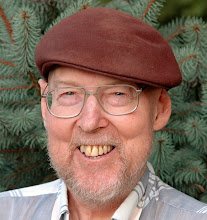
Nonprofits can learn from marketing guru Seth Godin's father who has been a successful manager and entrepreneur and he's always given without expecting in return.
In a recent blog post Godin notes that most companies and marketers give in order to get. The same can be said for nonprofits.
But I think nonprofits should give without expecting to get. In fact when I started Evergreen Leaders in 2003 I wanted the organization to adopt a policy of giving 10% of it's income away.
The attorney helping us to apply for our 501c3 was dubious that the IRS would approve such a plan. Our by-laws state clearly that we practice giving away 10% as a way of showing gratitude to God our Creator who we believe provides all we need. We also have a clause that says we'll give the money only to other 501c3s.
The IRS approved our 501c3 application.
Last fall I delivered a check to a charity for their capital campaign that the EGL board decided to give to. No organization that we have given to had ever used our services but it turns out that the organization had lost their campaign consultant in the middle of the campaign. They contracted with EGL to serve as their consultant for the remainder of the campaign.
Did we give to them to get?
No, we gave because we are grateful for a generous God.
As Seth concludes in his post, "Now, more than ever, it's easier to give even when it seems like you're not going to get. The happy irony is that this turns out to be a very effective marketing approach, even though that's not the point."
Tuesday, March 20, 2007


Thursday, March 15, 2007
Hire athletes
This issue of Sales Caffeine caught my attention because my two daughters and a son were college athletes--track and cross country, volleyball abd basketball.
Sales guru Jeffrey Gitomer walked around his office and asked each person if they ever played sports on a team or competitively. He was surprised to discover "that the people who had played sports were among my best employees."
"If you’re an employer," suggests Gitomer, "you may want to look past job experience, and read deeper into athletic experience. It will give you greater insight as to the life skills of a person, not just their job skills." Check out why athletes make better employees.
Sales guru Jeffrey Gitomer walked around his office and asked each person if they ever played sports on a team or competitively. He was surprised to discover "that the people who had played sports were among my best employees."
"If you’re an employer," suggests Gitomer, "you may want to look past job experience, and read deeper into athletic experience. It will give you greater insight as to the life skills of a person, not just their job skills." Check out why athletes make better employees.
The joy of teaching
Last Monday night I taught a one hour course on blogs at our local library. What fun. Three people came to the event. My wife came, not because she has much of an interest in blogs, but she was being nice to me. I like nice.
The other students were a retired couple who knew nothing about blogs other than the term. They were eager students and by the end of the hour they headed home with plans to create a blog this weekend.
Have a passion? Volunteer to teach it at your local library.
There's something deeply satisfying about teaching eager students.
The other students were a retired couple who knew nothing about blogs other than the term. They were eager students and by the end of the hour they headed home with plans to create a blog this weekend.
Have a passion? Volunteer to teach it at your local library.
There's something deeply satisfying about teaching eager students.
Saturday, March 03, 2007
How a patient changed a hospital policy
In December I did a post about an experience with a nonprofit hospital that had my wife and me furious.
When the hospital, whose slogan is "We care for you", tried to enforce a policy that required Sarah to go home rather than to stay the night with me, I called the administrator at home at 10:20 p.m. and said that if the hospital enforced the policy it would be the last time I used the hospital. The administrator worked the magic that top administrators can do. Sarah stayed the night.
A week later I was back in the hospital with pneumonia. One night I asked if my daughter, a nurse also, could stay the night with me. The CNA that I made the request to said, "I don't know. They're really screwy about such things." When she came back to let me know she could stay she let me know that I "sure was lucky."
I was glad that she made that comment, implying that I was lucky to have the power to pull strings because it helped me ask the question: "Do I want this hospital to be a good for me and my family or good for all patients and families?
After the two hospital stays I began lobbying the administrator by e-mail to change the policy. I knew that both my family physician and surgeon had lobbied him. My family doc encouraged me (and my family) to take it to the hospital board, but I wanted to work first with the administrator.
We exchanged a series of e-mails and he promised to work on it. Then I received this e-mail recently:
When the hospital, whose slogan is "We care for you", tried to enforce a policy that required Sarah to go home rather than to stay the night with me, I called the administrator at home at 10:20 p.m. and said that if the hospital enforced the policy it would be the last time I used the hospital. The administrator worked the magic that top administrators can do. Sarah stayed the night.
A week later I was back in the hospital with pneumonia. One night I asked if my daughter, a nurse also, could stay the night with me. The CNA that I made the request to said, "I don't know. They're really screwy about such things." When she came back to let me know she could stay she let me know that I "sure was lucky."
I was glad that she made that comment, implying that I was lucky to have the power to pull strings because it helped me ask the question: "Do I want this hospital to be a good for me and my family or good for all patients and families?
After the two hospital stays I began lobbying the administrator by e-mail to change the policy. I knew that both my family physician and surgeon had lobbied him. My family doc encouraged me (and my family) to take it to the hospital board, but I wanted to work first with the administrator.
We exchanged a series of e-mails and he promised to work on it. Then I received this e-mail recently:
Just wanted to let you know that the policy re: visitors staying overnight has been formally modified. In short, a visitor/family member/significant other may stay overnight with a patient upon request as long as it does not impede with routine nursing care or contradict physicians order. Due to space limitations, we need to limit the overnight policy to one person at a time in the room but it is rare that more than one person requests the accommodation.
Again, thanks for bringing this to our attention.
Monday, February 26, 2007
Evaluation as empowering
One of our Evergreen Leaders board members, Lynn Reha, loves helping organizations do self-assessments. My eyes sort of blur and my brain becomes fuzzy when I think of nonprofits doing program evaluation. It all seems cumbersome to me.
And yet I keep coming back to simple questions. Given that Evergreen Leaders' mission is to help nonprofits thrive by meeting deep human needs and being a great workplace, how do we know if we are helping nonprofits meet deep human needs? How do we know we are helping a nonprofit to be a great work place?
I've found a website that makes assessment clearer and easier to think through, Innovation Network.
Through their website they "offers free tools and resources for assessment, accountability, communication, and program improvement." Can't beat that. All you need to do is complete a free registration and you can use their tools.
Also, I like their philosophy: "We believe evaluation can be a form of empowerment. Participatory evaluation empowers an organization to define its own success, to pose its own evaluation questions, and to involve stakeholders and constituents in the process."
And yet I keep coming back to simple questions. Given that Evergreen Leaders' mission is to help nonprofits thrive by meeting deep human needs and being a great workplace, how do we know if we are helping nonprofits meet deep human needs? How do we know we are helping a nonprofit to be a great work place?
I've found a website that makes assessment clearer and easier to think through, Innovation Network.
Through their website they "offers free tools and resources for assessment, accountability, communication, and program improvement." Can't beat that. All you need to do is complete a free registration and you can use their tools.
Also, I like their philosophy: "We believe evaluation can be a form of empowerment. Participatory evaluation empowers an organization to define its own success, to pose its own evaluation questions, and to involve stakeholders and constituents in the process."
Wednesday, February 21, 2007
My problem with accountability
For some time I’ve had trouble with calls for accountability. I’ve been part of a Christian communal group for almost 30 years and from time to time some folks in the group issue calls for accountability.
I strongly believe in people being responsible and moral but the longer I’ve been in leadership both in our communal group and in secular organizations the more dubious I’ve been of actions taken under the guise of accountability. When I first joined the communal group we had lots of rules and decision-making procedures to help people be accountable. Then one of the founders of the group disclosed a history of sexual misconduct including abuse of children.
He was leading a group that deeply believed in accountability. How could that be? I began to lose faith in lots of rules as a way of accountability.
The other way I’ve seen leaders try to bring about accountability is to call people on the carpet. That sometimes seems to produce good short term results but it doesn’t seem to help people be responsible in the long term.
Then last Sunday night I read Bill Harris’s post on Accountability, systems, and loop gain. He developed a computer model to uncover the reason a particular organization had a problem with its ability to manage its expenses. Using the model he was able to test what types of reports would best help managers to manage expenses. Once they determined the best report to give managers the problem was reduced by 95%.
You can read the post and his associated article for the details but I resonate with his observation:
The model shows a most interesting lesson. In a poorly designed system, high management pressure (high externally-imposed accountability) made things worse, while low accountability actually made things better. In a well designed system, management pressure really didn't matter so much…
I also strongly resonated with his conclusion: “Management's primary job is to create systems that work well, not to push people to do well.”
Now I’m wondering how to improve our communal systems so we need less leadership pressure.
Sunday, February 18, 2007
Global risks and your nonprofit
Thanks to Deon Binneman's blog , I just checked out the World Economic Forum's Global Risks 2007 report.
One of the 7 Paths nonprofits use to thrive is the ecosystem path. The path is based on the principle that organizations thrive on healthy, improvisational relationships with their environment.
A shriveling organization defends its border against the world but a thriving organization sees its external borders as creative points for discovering the healthiest ways to improvise with reality around the organization.
The Global Risks 2007 reports indicates how the ecosystem your nonprofit operates in may shift, requiring you to improvise. Here are the 23 "Core” Global Risks they've indentified in the world economic, environmental, geopolitical, societal, and technological ecosystem:
Economic
• Oil price shock/energy supply interruptions
• US current account deficit/fall in US$
• Chinese economic hard landing
• Fiscal crises caused by demographic shift
• Blow up in asset prices/excessive indebtedness
Environmental
• Climate change
• Loss of freshwater services
• Natural catastrophe: Tropical storms
• Natural catastrophe: Earthquakes
• Natural catastrophe: Inland flooding
Geopolitical
• International terrorism
• Proliferation of weapons of mass destruction (WMD)
• Interstate and civil wars
• Failed and failing states
• Transnational crime and corruption
• Retrenchment from globalization
• Middle East instability
Societal
• Pandemics
• Infectious diseases in the developing world
• Chronic disease in the developed world
• Liability regimes
Technological
• Breakdown of critical information infrastructure (CII)
• Emergence of risks associated with nanotechnology
These litany of risks are scary, especial when the introduction of the report says, "Expert opinion suggests that levels of risk are rising in almost all of the 23 risks on which the Global Risk Network has been focused over the last year – but mechanisms in place to manage and mitigate risk at the level of businesses, governments and global governance are inadequate."
The basic premise of Evergreen Leaders is that nonprofits exist to meet deep human needs and to be great workplaces. Nonprofits that have healthy, improvisational relationships with their environment will have plenty of deep human needs to meet.
One of the 7 Paths nonprofits use to thrive is the ecosystem path. The path is based on the principle that organizations thrive on healthy, improvisational relationships with their environment.
A shriveling organization defends its border against the world but a thriving organization sees its external borders as creative points for discovering the healthiest ways to improvise with reality around the organization.
The Global Risks 2007 reports indicates how the ecosystem your nonprofit operates in may shift, requiring you to improvise. Here are the 23 "Core” Global Risks they've indentified in the world economic, environmental, geopolitical, societal, and technological ecosystem:
Economic
• Oil price shock/energy supply interruptions
• US current account deficit/fall in US$
• Chinese economic hard landing
• Fiscal crises caused by demographic shift
• Blow up in asset prices/excessive indebtedness
Environmental
• Climate change
• Loss of freshwater services
• Natural catastrophe: Tropical storms
• Natural catastrophe: Earthquakes
• Natural catastrophe: Inland flooding
Geopolitical
• International terrorism
• Proliferation of weapons of mass destruction (WMD)
• Interstate and civil wars
• Failed and failing states
• Transnational crime and corruption
• Retrenchment from globalization
• Middle East instability
Societal
• Pandemics
• Infectious diseases in the developing world
• Chronic disease in the developed world
• Liability regimes
Technological
• Breakdown of critical information infrastructure (CII)
• Emergence of risks associated with nanotechnology
These litany of risks are scary, especial when the introduction of the report says, "Expert opinion suggests that levels of risk are rising in almost all of the 23 risks on which the Global Risk Network has been focused over the last year – but mechanisms in place to manage and mitigate risk at the level of businesses, governments and global governance are inadequate."
The basic premise of Evergreen Leaders is that nonprofits exist to meet deep human needs and to be great workplaces. Nonprofits that have healthy, improvisational relationships with their environment will have plenty of deep human needs to meet.
Tuesday, February 13, 2007
Naps are good
We human beings are built for a rhythm of good hard work and good recovery time. After about 90 minutes of concentration we do well to have a bit of recovery time.
Now a study shows naps are good:
Now a study shows naps are good:
- In the largest study to date on the health effects of napping, researchers tracked 23,681 healthy Greek adults for an average of about six years. Those who napped at least three times weekly for about half an hour had a 37 percent lower risk of dying from heart attacks or other heart problems than those who did not nap.
Monday, February 12, 2007
"I made a mistake"
In a recent post on the Organizational Development Network list serve leadership coach Ann Kruse noted that she is “fascinated by Hillary Clinton's decision to avoid the word 'mistake'
with regard to her vote for the
Ann offered a variety of explanations for Hillary’s action including gender and power issues. I’d like to offer another. As someone who became disabled as a teen and then has held a variety of leadership positions all of my adult life I am aware of the tremendous pressure on leaders to be capable and self-assured and, at the same time, I am aware that leaders are as vulnerable as the next person.
I learned to survive and build on the experience of being physically disabled by being open about the emotional trauma linked with the experience. When I began my career as a leader, I felt internal and external pressure to be the strong, capable, self-assured male. At the same time being capable and self-assured is only part of my story since I need to ask for physical help regularly and I am physically and emotionally vulnerable to an unpredictable disease.
To be an integrated leader I try to be both capable and acknowledge my vulnerabilities. Even the most powerful leaders and organizations are vulnerable. Take the
insurgencies. Our political leaders spend a lot of energy denying our vulnerabilities and mistakes.
While I try to be capable and self-assured as a leader, I assume that I will make mistakes and I make it a point to readily admit my mistakes. It takes a lot of energy to deny mistakes. I also make it a practice to meet three times a year with two mentors who are separate from the organizations I lead. I share my emotional vulnerabilities as a leader, husband, and father
with them. It takes a lot of energy to ignore ones vulnerabilities.
I feel sympathy for Hillary Clinton who, to put it mildly, is under extreme pressure to show herself to be a capable, self-assured person in order to be elected. At the same time, running for political office at that level makes one extremely vulnerable.
From an organizational development perspective we as a nation demand strong, capable, leaders and, as a consequence, we get leaders who deny our nation’s vulnerabilities and their own mistakes.
A humble hierarchy organization learns from critics inside and outside the organization. It’s tough to lead a world power from a humble hierarchy stance making it difficult for a world power and its leaders to admit and learn from their mistakes.
Friday, February 09, 2007
Love Machine
Does your nonprofit have smart and friendly systems in place to increase positive interactions between staff?
Philip Rosedale, creator of Second Life, and his company, Linden Labs, have an interesting system in place. They call it the Love Machine. Here's how Rosedale describes it in an Inc. article:
For those of you who wonder whether a positive work atmosphere is all that important you can check out the work of psychologist Barbara L. Fredrickson, University of Michigan, and mathemetician Marcial F. Losada, Universidade Cato´lica de Brası´lia, whose research shows a ratio of 2.9 positive interactions to 1 negative interaction is associated with flourishing work groups.
As Frederickson and Losado noted in their review of literature “bad is stronger than good” and you need 2.9 positive interactions for every negative interaction in a work group for the group thrive.
Philip Rosedale, creator of Second Life, and his company, Linden Labs, have an interesting system in place. They call it the Love Machine. Here's how Rosedale describes it in an Inc. article:
- We have this thing we built called the Love Machine. The Love Machine allows anyone who works here as a Linden employee to send anyone else a brief note that says "Thank you for doing this for me." There is a little webpage where you can go to send an e-mail, and then you get a little e-mail that says "Love From Philip" in the subject and it's got text in it. Now, you think, what's the big deal about that? Well, all of that stuff goes into a database. Your review carries that. Everybody is sending love to each other. It creates a positive collaborative environment.
- Most businesspeople communicate in a mostly negative way. If people are encouraged to be entrepreneurs and take risks, they can also become combative and competitive. You have to balance that. So we built the Love Machine for balance.
For those of you who wonder whether a positive work atmosphere is all that important you can check out the work of psychologist Barbara L. Fredrickson, University of Michigan, and mathemetician Marcial F. Losada, Universidade Cato´lica de Brası´lia, whose research shows a ratio of 2.9 positive interactions to 1 negative interaction is associated with flourishing work groups.
As Frederickson and Losado noted in their review of literature “bad is stronger than good” and you need 2.9 positive interactions for every negative interaction in a work group for the group thrive.
Monday, February 05, 2007
Getting back on the treasure path
Every nonprofit starts based on a mission--who the npo is going to serve and what the transformed lives of those served look like--deep values, and the founding stories of the organization. I call these the markers for the organizations treasure path.
Usually the mission, the values, and the founding story is clear at the beginning. But over time as the organization sets up systems, struggles with changes in the environment and its clientele, and as the npo ages new and often conflicting stories emerge.
Appreciative inquiry can be helpful in getting the organization back on track. Mark Lau Branson has a very helpful summary of AI, "Ten Assumptions of Appreciative Inquiry" in the most recent issue of Alban Weekly. While the article is aimed at an audience of church leaders it's equally applicable to other nonprofits.
Appreciative Inquiry is a good way to help your organization get back on its treasure path.
Usually the mission, the values, and the founding story is clear at the beginning. But over time as the organization sets up systems, struggles with changes in the environment and its clientele, and as the npo ages new and often conflicting stories emerge.
Appreciative inquiry can be helpful in getting the organization back on track. Mark Lau Branson has a very helpful summary of AI, "Ten Assumptions of Appreciative Inquiry" in the most recent issue of Alban Weekly. While the article is aimed at an audience of church leaders it's equally applicable to other nonprofits.
Appreciative Inquiry is a good way to help your organization get back on its treasure path.
Thursday, February 01, 2007
Is a little mess part of a smart and friendly system?
My workspace always includes stacks of books and papers. I am blessed to be married to a woman is wonderful, goodhearted, and organized. Usually about once a year before vacation she helps me spend half a day filing etc. And then I slowly but surely make it a mess again.
She survives my home office by declaring that it is not part of the house. Otherwise she'd have the urge to get on my case to straighten it up.
For year's I've felt guilty about the clutter that accumulates in my workspace but, thanks to Perfect Mess: The Hidden Benefits of Disorder: How Crammed Closets, Cluttered Offices, and On-the-Fly Planning Make the World a Better Place by Eric Abrahamson and David H. Freedman I no longer have to feel guilty.
Check out this great Inc. story on why chaos, clutter, disorganization, and on-the-fly decision-making actually are good for your company--and for you.
She survives my home office by declaring that it is not part of the house. Otherwise she'd have the urge to get on my case to straighten it up.
For year's I've felt guilty about the clutter that accumulates in my workspace but, thanks to Perfect Mess: The Hidden Benefits of Disorder: How Crammed Closets, Cluttered Offices, and On-the-Fly Planning Make the World a Better Place by Eric Abrahamson and David H. Freedman I no longer have to feel guilty.
Check out this great Inc. story on why chaos, clutter, disorganization, and on-the-fly decision-making actually are good for your company--and for you.
Monday, January 29, 2007
Being nonprofit and entrepreneurial
It's not online yet but the February issue of Inc. has an interesting interview with Second Life founder Phillip Rosedale. Second Life is the virtual reality world that became a phenomenon in 2006.
I'm still a little queasy about venturing onto Second Life but other businesses and nonprofits are so one of these days...
I was more interested in some of Rosedale's approaches to running Linden Lab, the company that created and runs Second Life. At first they simply told their engineers to e-mail everyone in the company what you are going to do that work, then work on it, and then e-mail everyone how you did it.
That system has evolved into a huge database of "stuff to do. You choose your own work from it."
"I am pretty critical of traditional business styles," Rosedale says. Me too.
Companies encourage their people to be entrepreneurial. "But the way you are really entrepreneurial," Rosedale says, "is that you have to set your own strategic direction. That's what entrerpeneurs do. You have to take risks and you have to be held accountable."
Even though Evergreen Leaders is a nonprofit I get to be very entrepreneurial. Each week I e-mail the board what I call Monday Morning Coffee and in it I describe what I am going to do that week and how my work went the previous week.
When you get to choose your own things to work on your naturally choose to do things that fit your talents.
I'm still a little queasy about venturing onto Second Life but other businesses and nonprofits are so one of these days...
I was more interested in some of Rosedale's approaches to running Linden Lab, the company that created and runs Second Life. At first they simply told their engineers to e-mail everyone in the company what you are going to do that work, then work on it, and then e-mail everyone how you did it.
That system has evolved into a huge database of "stuff to do. You choose your own work from it."
"I am pretty critical of traditional business styles," Rosedale says. Me too.
Companies encourage their people to be entrepreneurial. "But the way you are really entrepreneurial," Rosedale says, "is that you have to set your own strategic direction. That's what entrerpeneurs do. You have to take risks and you have to be held accountable."
Even though Evergreen Leaders is a nonprofit I get to be very entrepreneurial. Each week I e-mail the board what I call Monday Morning Coffee and in it I describe what I am going to do that week and how my work went the previous week.
When you get to choose your own things to work on your naturally choose to do things that fit your talents.
Monday, January 22, 2007
Beyond mission statements
If a mission statement is the headline, what's the story?
For several years I have taught individuals and leaders how how to write brief powerful personal and organizational mission statements. I've even created a two-page "A guide to developing your organization’s mission statement
A well written mission statement is like a headline. It packs alots of information and punch into a few words. But a newspaper or magazine would sell few copies if it consisted of only headlines.
To describe the treasure that your organization has to offer clients, staff, board, donors, and funders, you need more that a mission statement--you need stories.
Secular and religious nonprofit leaders can learn from Diana Butler Bass who for three years studied 50 vital mainline Protestant churches to see what made them vital. Her research led her to write two books and one of her many observations in a recent Alban Weekly caught my attention:
If your mission statement is the headline for your nonprofit, then the stories you and your colleagues tell are the treasure.
To get your free copy of "A guide to developing your organization’s mission statement
For several years I have taught individuals and leaders how how to write brief powerful personal and organizational mission statements. I've even created a two-page "A guide to developing your organization’s mission statement
A well written mission statement is like a headline. It packs alots of information and punch into a few words. But a newspaper or magazine would sell few copies if it consisted of only headlines.
To describe the treasure that your organization has to offer clients, staff, board, donors, and funders, you need more that a mission statement--you need stories.
Secular and religious nonprofit leaders can learn from Diana Butler Bass who for three years studied 50 vital mainline Protestant churches to see what made them vital. Her research led her to write two books and one of her many observations in a recent Alban Weekly caught my attention:
Throughout my research on vital mainline churches, both clergy and congregational leaders were storytellers. They knew their own faith stories, they knew the stories of their congregations, they knew their tradition's stories, and they knew the larger Christian and biblical stories. They exhibited ease and comfort in sharing these stories and invited others into a variety of stories in natural and authentic ways. In the process, they opened paths for other people to learn and tell stories of faith. And they ably moved between personal, congregational, and biblical stories to create worlds of spiritual and theological meaning. They intuited the power of story to rearrange people's lives...
If your mission statement is the headline for your nonprofit, then the stories you and your colleagues tell are the treasure.
To get your free copy of "A guide to developing your organization’s mission statement
Saturday, January 20, 2007
Not serving but serving better
When I set my 2007 goals for work as CEO/Teacher's Assistant I had a nagging feeling that something was amiss. I like setting goals because they give me a sense of accomplishment but something in me was resisting goal-setting even as I did so.
Then I read a Fast Company article about a typical Toyota plant in Kentucky, where "What is so striking about Toyota's Georgetown factory is, in fact, that it only looks like a car factory. It's really a big brain--a kind of laboratory focused on a single mission: not how to make cars, but how to make cars better."
Later in the article another quote caught my eye: "What happens every day at Georgetown, and throughout Toyota, is teachable and learnable. But it's not a set of goals, because goals mean there's a finish line, and there is no finish line. It's not something you can implement, because it's not a checklist of improvements. It's a way of looking at the world."
Something clicked. At Evergreen Leaders we teach the smart and friendly systems path is one of the 7 paths organizations use to thrive. But there is no such thing as a perfectly smart and friendly system.
Currently I am producing Evergreen Leaders' first annual report, a system that corporations have used for years to report to stakeholders on the previous year and plans for the next year. Looking at it through the Toyota lens, next year I'll have the opportunity to produce a better annual report.
In fact, after I produce the first annual report I can use 2007 to improve the way that I gather the information to use in the 2007 annaul report.
The annual report and the smart and friedly systems used to create it can be improved ever year.
So your nonprofit is not in the business of serving elders or people with disabilities or the homeless but your organization exists to serve them better.
I suspect that simple change--not serving but serving better--could have a profound impact on your organization from this day forward.
Then I read a Fast Company article about a typical Toyota plant in Kentucky, where "What is so striking about Toyota's Georgetown factory is, in fact, that it only looks like a car factory. It's really a big brain--a kind of laboratory focused on a single mission: not how to make cars, but how to make cars better."
Later in the article another quote caught my eye: "What happens every day at Georgetown, and throughout Toyota, is teachable and learnable. But it's not a set of goals, because goals mean there's a finish line, and there is no finish line. It's not something you can implement, because it's not a checklist of improvements. It's a way of looking at the world."
Something clicked. At Evergreen Leaders we teach the smart and friendly systems path is one of the 7 paths organizations use to thrive. But there is no such thing as a perfectly smart and friendly system.
Currently I am producing Evergreen Leaders' first annual report, a system that corporations have used for years to report to stakeholders on the previous year and plans for the next year. Looking at it through the Toyota lens, next year I'll have the opportunity to produce a better annual report.
In fact, after I produce the first annual report I can use 2007 to improve the way that I gather the information to use in the 2007 annaul report.
The annual report and the smart and friedly systems used to create it can be improved ever year.
So your nonprofit is not in the business of serving elders or people with disabilities or the homeless but your organization exists to serve them better.
I suspect that simple change--not serving but serving better--could have a profound impact on your organization from this day forward.
Thursday, January 18, 2007
A new way to elect our president
The 59 Smartest Orgs Online
Nonprofits are scrambling to find smart and friendly ways to connect with their supporters using the web. Learn from the best.
Tuesday, January 09, 2007
The hard part is to stay with it
Sometimes you come across a passage in a book that is worth returning to again and again. A couple years ago my daughter gave me Granny D: Walking Across America in My 90th Year.
People who are drawn leading nonprofits intend to do good. In her 90th year Granny D, Doris Haddock, walked across America to bring attention to the need for campaign finance reform. The she wrote her memoir. Recently it's been published in paperback. Here's the passage:
...when you take on some leadership responsibilities in the world, you must accept the fact that you will change lives. Your intention is to do good for everyone. But you will change lives in ways that you cannot fully control, and sometimes things will go terribly wrong. The hard part is to stay with it and not give up trying to do good in the world. But my, it is hard when tragedy and defeat come visiting, as they do. If love is your motivation, and if your respect the people you serve as your moral equals, you will do more good than harm over a lifetime--by far. But you will do some harm, and it may haunt you when you take a walk in your old age.
That's the humble heirarchy path.
People who are drawn leading nonprofits intend to do good. In her 90th year Granny D, Doris Haddock, walked across America to bring attention to the need for campaign finance reform. The she wrote her memoir. Recently it's been published in paperback. Here's the passage:
...when you take on some leadership responsibilities in the world, you must accept the fact that you will change lives. Your intention is to do good for everyone. But you will change lives in ways that you cannot fully control, and sometimes things will go terribly wrong. The hard part is to stay with it and not give up trying to do good in the world. But my, it is hard when tragedy and defeat come visiting, as they do. If love is your motivation, and if your respect the people you serve as your moral equals, you will do more good than harm over a lifetime--by far. But you will do some harm, and it may haunt you when you take a walk in your old age.
That's the humble heirarchy path.
Thursday, January 04, 2007
Spotting dangerous leaders II
| 7 Paths for Thriving Organizations, # 98, December 14, 2006 |
| “I was dangerous,” Len Corti, a retired Fortune 500 executive, said to me as we ate lunch in a small café in Utica, Illinois, “because I believed in what I was doing.”
Wisdom for the week: Humble hierarchy leaders have little personal ambition, an unwavering will to help the organization transform the lives of those it serves, and a passion to create space for all to thrive. |
Monday, January 01, 2007
Changes in your npo's ecosystem
Business 2.0 highlights the 15 most significant innovations, events and launches that are planned for the 2007. The event most likely to create more misery and more work for nonprofits--gambling on your mobile phone. The best event for developing countries-10 million laptops in the hands of the planet's poorest children by the end of 2007.
Last night I watched Al Gore's An Inconvenient Truth. Nonprofits need to join the business community in dealing with global warming. Thin-film solar panels may be in the future of your nonprofit.
Last night I watched Al Gore's An Inconvenient Truth. Nonprofits need to join the business community in dealing with global warming. Thin-film solar panels may be in the future of your nonprofit.
Subscribe to:
Posts (Atom)