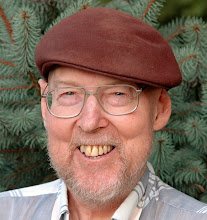
Small business owners are tired of being hit up continually for donations. The topic came up in a conversation I had today with Illinois State Senator Gary Dahl. "There's a golf tournament almost every day during the summer," he said.
What's the alternative?
Annual campaigns.
Four years ago I helped a nonprofit stop doing special events (yes, they did a golf tournaments, dinners, and a dozen other events) and launched an annual campaign. Dahl served as the first chairperson of the campaign.
The organization kept their popular Christmas appeal and then organized volunteers from the business and professional community to meet in person and ask the person for a pledge for the year.
In four years, the nonprofit doubled it's income from the face to face solicitation phase. And the business and professional people were delighted because they knew that at least one major nonprofit in the community was going to ask them only once a year.
Showing posts with label The smart and friendly systems path. Show all posts
Showing posts with label The smart and friendly systems path. Show all posts
Wednesday, September 12, 2007


Thursday, September 06, 2007
The principle of the the thing
"There is no policy in the handbook forbidding a supervisor from living with someone he or she is supervising," the young supervisor said.
She was right. She was also inadvertently pointing to the flaw of using policies as a management tool.
The supervisor at a community nonprofit faced a housing crisis and she faced who solved her housing problem by moving in with a male staff person whom she supervised.
When the program director discovered her living arrangement, she transferred her to other department so that she would no longer supervise the staff member she was living with. The supervisor objected to the transfer and pointed out she was violating no policy.
That's the inherent weaknesses of running an organization by policies. You can never create enough policies to cover all the crazy things people will do. It would be better to have a few principles, one of them might be, avoid conflicts of interest with anyone that you supervise.
Here’s a quote that expresses what I think about principles and policies:
A principle is just a commonly held guide for thinking, behaving and making decisions. You can manage a process or a machine with regulations, rules, and procedures, but if you want the best chance to capture people’ latent potential, then you start with principles that people “own” and help create.*
Wednesday, August 29, 2007
Fundraising as a mangement function
While taking a break from revamping the Evergreen Leaders website, I check out other nonprofit bloggers. I recently discovered Rosetta Thurman's blog, Perspectives from the Pipeline.
Two of the principles mentioned in a post from fundraising school caught my attention:
I chuckled when I read "Whoever spends money..." It takes leaders and a system to apply that principle.
Two of the principles mentioned in a post from fundraising school caught my attention:
- Fundraising is essentially a management process.
- Whoever spends money in your organization should be involved in raising money for it.
I chuckled when I read "Whoever spends money..." It takes leaders and a system to apply that principle.
Monday, June 04, 2007
Fervently calling a soldier a hero
One day several year ag0, shortly after America began a policy of torture as part of its response to 9-11, I suddenly had a sick feeling in my stomach. What will this do to the men who do the torturing? What will it be like when they return to the USA?
Now this Washington Post story describe the tortured lives of torturers after they return to the USA. Torture, it turns out, is not a smart a friendly system that brings about the treasure of democracy.
It seems to me that one way we as a country deal with our guilt over sending young men and women to distant lands to kill and maim and be killed and maimed is to fervently call our soldiers heroes. The story aptly described that when you are suffering for what you've done in war, being called a hero doesn't help.
A humble man does not cut a soldier off by calling him a hero. He istens.
Now this Washington Post story describe the tortured lives of torturers after they return to the USA. Torture, it turns out, is not a smart a friendly system that brings about the treasure of democracy.
It seems to me that one way we as a country deal with our guilt over sending young men and women to distant lands to kill and maim and be killed and maimed is to fervently call our soldiers heroes. The story aptly described that when you are suffering for what you've done in war, being called a hero doesn't help.
A humble man does not cut a soldier off by calling him a hero. He istens.
Monday, May 21, 2007
Doing more for a cool planet
To produce a treasure you need a smart and friendly system. Seth Godin rightly points out that humans have a powerful impulse to do more. So what's a smart and friendly system to get us humans to produce less carbon emissions to reduce global warming? Here's Seth's take:
- let's figure out how to turn this into a battle to do more, not less. Example one: require all new cars to have, right next to the speedometer, a mileage meter. And put the same number on an LCD display on the rear bumper. Once there's an arms race to see who can have the highest number, we're on the right track.
Sunday, April 29, 2007
Eliminate what?

4. Eliminate management, organization charts, job descriptions, and hourly wages.
I enjoy people who approach life from less than standard approaches. I’ve regularly made suggestions in the organizations I’ve been apart of that have led people to look at me askance.
A good friend of mine recently sent his son to talk to me about his career because, as he told his son, “Rich thinks out of the box and some of his ideas are downright hare-brained.”
So far in Bakke’s Joy at Work Top Ten I’ve been enthusiastic. But I must admit even I, when I read “eliminate management”, was taken aback.
Bakke’s #4 touches on one of the 7 paths that I’ve written about before--the smart and friendly systems path. Every organization develops systems. The trick is to dazzle people with your organization's smart and friendly systems.
Most nonprofits have management, organization charts, job descriptions, and categorize staff as hourly or salary. Each of these is so much a part of companies and nonprofits in the
But none of the standard organizational practices were handed down by God as part of the Ten Commandments and thus we are free to ask if they are smart and friendly systems. Do they really help your nonprofit transform the lives of the people you serve and do they really make your nonprofit to be a great work place?
While trying to create a fun work place at the energy giant, AES, Bakke noted that dividing workers into salary and hourly divided people which does not make for a fun work place. Bakke went on a campaign to put everyone in his company on salary. Of course, that’s against the law. The Fair Labor Standards Act was passed in the 1930s to protect hourly workers and to ensure they were paid overtime for work over 40 hours a week.
Bakke made working on a salary such a great system for workers, that almost everyone, including union workers, voluntarily joined the salary system. As a built-in safe guard, and to keep the company out of legal trouble, workers eligible under law to be hourly, could switch back to hourly any time they wanted.
Former hourly workers often discovered that they could work less hours and still get paid the same.
Do your systems, including managers, really make your nonprofit a smart a friendly workplace? If not, eliminate them and come up with smart and friendly systems.
Saturday, March 03, 2007
How a patient changed a hospital policy
In December I did a post about an experience with a nonprofit hospital that had my wife and me furious.
When the hospital, whose slogan is "We care for you", tried to enforce a policy that required Sarah to go home rather than to stay the night with me, I called the administrator at home at 10:20 p.m. and said that if the hospital enforced the policy it would be the last time I used the hospital. The administrator worked the magic that top administrators can do. Sarah stayed the night.
A week later I was back in the hospital with pneumonia. One night I asked if my daughter, a nurse also, could stay the night with me. The CNA that I made the request to said, "I don't know. They're really screwy about such things." When she came back to let me know she could stay she let me know that I "sure was lucky."
I was glad that she made that comment, implying that I was lucky to have the power to pull strings because it helped me ask the question: "Do I want this hospital to be a good for me and my family or good for all patients and families?
After the two hospital stays I began lobbying the administrator by e-mail to change the policy. I knew that both my family physician and surgeon had lobbied him. My family doc encouraged me (and my family) to take it to the hospital board, but I wanted to work first with the administrator.
We exchanged a series of e-mails and he promised to work on it. Then I received this e-mail recently:
When the hospital, whose slogan is "We care for you", tried to enforce a policy that required Sarah to go home rather than to stay the night with me, I called the administrator at home at 10:20 p.m. and said that if the hospital enforced the policy it would be the last time I used the hospital. The administrator worked the magic that top administrators can do. Sarah stayed the night.
A week later I was back in the hospital with pneumonia. One night I asked if my daughter, a nurse also, could stay the night with me. The CNA that I made the request to said, "I don't know. They're really screwy about such things." When she came back to let me know she could stay she let me know that I "sure was lucky."
I was glad that she made that comment, implying that I was lucky to have the power to pull strings because it helped me ask the question: "Do I want this hospital to be a good for me and my family or good for all patients and families?
After the two hospital stays I began lobbying the administrator by e-mail to change the policy. I knew that both my family physician and surgeon had lobbied him. My family doc encouraged me (and my family) to take it to the hospital board, but I wanted to work first with the administrator.
We exchanged a series of e-mails and he promised to work on it. Then I received this e-mail recently:
Just wanted to let you know that the policy re: visitors staying overnight has been formally modified. In short, a visitor/family member/significant other may stay overnight with a patient upon request as long as it does not impede with routine nursing care or contradict physicians order. Due to space limitations, we need to limit the overnight policy to one person at a time in the room but it is rare that more than one person requests the accommodation.
Again, thanks for bringing this to our attention.
Monday, February 26, 2007
Evaluation as empowering
One of our Evergreen Leaders board members, Lynn Reha, loves helping organizations do self-assessments. My eyes sort of blur and my brain becomes fuzzy when I think of nonprofits doing program evaluation. It all seems cumbersome to me.
And yet I keep coming back to simple questions. Given that Evergreen Leaders' mission is to help nonprofits thrive by meeting deep human needs and being a great workplace, how do we know if we are helping nonprofits meet deep human needs? How do we know we are helping a nonprofit to be a great work place?
I've found a website that makes assessment clearer and easier to think through, Innovation Network.
Through their website they "offers free tools and resources for assessment, accountability, communication, and program improvement." Can't beat that. All you need to do is complete a free registration and you can use their tools.
Also, I like their philosophy: "We believe evaluation can be a form of empowerment. Participatory evaluation empowers an organization to define its own success, to pose its own evaluation questions, and to involve stakeholders and constituents in the process."
And yet I keep coming back to simple questions. Given that Evergreen Leaders' mission is to help nonprofits thrive by meeting deep human needs and being a great workplace, how do we know if we are helping nonprofits meet deep human needs? How do we know we are helping a nonprofit to be a great work place?
I've found a website that makes assessment clearer and easier to think through, Innovation Network.
Through their website they "offers free tools and resources for assessment, accountability, communication, and program improvement." Can't beat that. All you need to do is complete a free registration and you can use their tools.
Also, I like their philosophy: "We believe evaluation can be a form of empowerment. Participatory evaluation empowers an organization to define its own success, to pose its own evaluation questions, and to involve stakeholders and constituents in the process."
Friday, February 09, 2007
Love Machine
Does your nonprofit have smart and friendly systems in place to increase positive interactions between staff?
Philip Rosedale, creator of Second Life, and his company, Linden Labs, have an interesting system in place. They call it the Love Machine. Here's how Rosedale describes it in an Inc. article:
For those of you who wonder whether a positive work atmosphere is all that important you can check out the work of psychologist Barbara L. Fredrickson, University of Michigan, and mathemetician Marcial F. Losada, Universidade Cato´lica de Brası´lia, whose research shows a ratio of 2.9 positive interactions to 1 negative interaction is associated with flourishing work groups.
As Frederickson and Losado noted in their review of literature “bad is stronger than good” and you need 2.9 positive interactions for every negative interaction in a work group for the group thrive.
Philip Rosedale, creator of Second Life, and his company, Linden Labs, have an interesting system in place. They call it the Love Machine. Here's how Rosedale describes it in an Inc. article:
- We have this thing we built called the Love Machine. The Love Machine allows anyone who works here as a Linden employee to send anyone else a brief note that says "Thank you for doing this for me." There is a little webpage where you can go to send an e-mail, and then you get a little e-mail that says "Love From Philip" in the subject and it's got text in it. Now, you think, what's the big deal about that? Well, all of that stuff goes into a database. Your review carries that. Everybody is sending love to each other. It creates a positive collaborative environment.
- Most businesspeople communicate in a mostly negative way. If people are encouraged to be entrepreneurs and take risks, they can also become combative and competitive. You have to balance that. So we built the Love Machine for balance.
For those of you who wonder whether a positive work atmosphere is all that important you can check out the work of psychologist Barbara L. Fredrickson, University of Michigan, and mathemetician Marcial F. Losada, Universidade Cato´lica de Brası´lia, whose research shows a ratio of 2.9 positive interactions to 1 negative interaction is associated with flourishing work groups.
As Frederickson and Losado noted in their review of literature “bad is stronger than good” and you need 2.9 positive interactions for every negative interaction in a work group for the group thrive.
Monday, January 29, 2007
Being nonprofit and entrepreneurial
It's not online yet but the February issue of Inc. has an interesting interview with Second Life founder Phillip Rosedale. Second Life is the virtual reality world that became a phenomenon in 2006.
I'm still a little queasy about venturing onto Second Life but other businesses and nonprofits are so one of these days...
I was more interested in some of Rosedale's approaches to running Linden Lab, the company that created and runs Second Life. At first they simply told their engineers to e-mail everyone in the company what you are going to do that work, then work on it, and then e-mail everyone how you did it.
That system has evolved into a huge database of "stuff to do. You choose your own work from it."
"I am pretty critical of traditional business styles," Rosedale says. Me too.
Companies encourage their people to be entrepreneurial. "But the way you are really entrepreneurial," Rosedale says, "is that you have to set your own strategic direction. That's what entrerpeneurs do. You have to take risks and you have to be held accountable."
Even though Evergreen Leaders is a nonprofit I get to be very entrepreneurial. Each week I e-mail the board what I call Monday Morning Coffee and in it I describe what I am going to do that week and how my work went the previous week.
When you get to choose your own things to work on your naturally choose to do things that fit your talents.
I'm still a little queasy about venturing onto Second Life but other businesses and nonprofits are so one of these days...
I was more interested in some of Rosedale's approaches to running Linden Lab, the company that created and runs Second Life. At first they simply told their engineers to e-mail everyone in the company what you are going to do that work, then work on it, and then e-mail everyone how you did it.
That system has evolved into a huge database of "stuff to do. You choose your own work from it."
"I am pretty critical of traditional business styles," Rosedale says. Me too.
Companies encourage their people to be entrepreneurial. "But the way you are really entrepreneurial," Rosedale says, "is that you have to set your own strategic direction. That's what entrerpeneurs do. You have to take risks and you have to be held accountable."
Even though Evergreen Leaders is a nonprofit I get to be very entrepreneurial. Each week I e-mail the board what I call Monday Morning Coffee and in it I describe what I am going to do that week and how my work went the previous week.
When you get to choose your own things to work on your naturally choose to do things that fit your talents.
Thursday, January 18, 2007
A new way to elect our president
The 59 Smartest Orgs Online
Nonprofits are scrambling to find smart and friendly ways to connect with their supporters using the web. Learn from the best.
Friday, December 22, 2006
Viral marketing as a smart and friendly system
Viral marketing is a smart a friendly system. You create something--a story, a video on You-Tube, or in this case, a remarkable digital Christmas card--and people will e-mail each other about it and the word spreads quickly. It's a very inexpensive way of marketing and can easily be adapted by nonprofits. Check out the Ashland College Christmas card.
Monday, December 18, 2006
Consensus and accountability
Yesterday I did a post that ended with me pondering how the Evergreen Leaders board can define its expectations for me as the CEO/Teachers Asst. and the organization in carrying out its mission. How can I report at each board meeting the effectiveness of Evergreen Leaders?
I am intrigued by an article in the Facilitation Quarterly called “The Link between Consensus and Profitability” The article summarizes a study done by Charles-Huber Heyvaert, a researcher at the
I was particularly intrigued that the study focused not on consensus on a particular decision but consensus on the overall objectives of the companies.
Nonprofits do not measure profitability but it has to be good when a nonprofit’s board has consensus on what key issues it wants to measure to determine our effectiveness as an organization in carrying out our mission.
Sunday, December 17, 2006
Accountabilty
Yesterday I met with the Evergreen Leaders board in a regular session. The board spent part of the time discussing its role. Someone mentioned that their role is to hold me, as CEO/Teacher's Assistant, accountable.
I responded that holding me accountable for EGL finances is easy because I can have our bookkeeper produce a financial statement for each board meeting.
But I would like the board define it's expecations of me and the organization in carrying out our mission. How can I report at each board meeting the effectiveness of Evergreen Leaders?
Our mission is to help nonprofits transform the lives of the people they serve and to be great work places. We do consulting, coaching, and leadership development workshops to help nonprofits to help thrive.
But how does the board measure our effectiveness in helping nonprofits carry out their mission and to be great work palces?
I think it's time to study John Carver again. And trust the board as the wrestle with what they expect from me and the organization.
I responded that holding me accountable for EGL finances is easy because I can have our bookkeeper produce a financial statement for each board meeting.
But I would like the board define it's expecations of me and the organization in carrying out our mission. How can I report at each board meeting the effectiveness of Evergreen Leaders?
Our mission is to help nonprofits transform the lives of the people they serve and to be great work places. We do consulting, coaching, and leadership development workshops to help nonprofits to help thrive.
But how does the board measure our effectiveness in helping nonprofits carry out their mission and to be great work palces?
I think it's time to study John Carver again. And trust the board as the wrestle with what they expect from me and the organization.
Sunday, December 10, 2006
Are e-letters a good nonprofit investment?
Last week I stopped in at Gateway Services, a nonprofit I've done consulting and training for. When I do a workshop, I ask particpants if I may have their e-mail address and add it to our 7 Paths e-letter list. As I was rolling down a hallway at the npo, a staff member stopped me and said how much she appresciated learning from the e-letter.
In this day in age of overflowing inboxes of spam I've wondered if the e-letter is a good use of my time.
Then tonight the Studio 501c blog pointed me to an executive summary of a study on e-letters by Nielsen Norman Group. The key finding of the study:
In this day in age of overflowing inboxes of spam I've wondered if the e-letter is a good use of my time.
Then tonight the Studio 501c blog pointed me to an executive summary of a study on e-letters by Nielsen Norman Group. The key finding of the study:
- Users tend to glance at websites when they need to accomplish something or to find the answer to a specific question. In contrast, newsletters feel personal because they arrive in users’ inboxes, and users have an ongoing relationship with them. Newsletters also have a social aspect, as users often forward them to colleagues and friends
- The positive aspect of this emotional relationship is that newsletters can create much more of a bond between users and a company than a website can.
Thursday, December 07, 2006
Whose cares more--nursing or housekeeping?
Within three hours of becoming a patient at a nonprofit, community hospital (a nasty bit spider-bite induced infection in my foot), a nursing supervisor had me furious. And my wife, Sarah, too.
No one may stay over night with a patient unless the patient is in serious condition, said a stone-faced nursing supervisor. A new policy, she said, because of boyfriends staying over night, homeless cousins, and people who had been drinking.
When I checked in I asked for a private room, glad to pay the extra $31 a night to make it possible for Sarah to stay in the room with me, something we had done last November when I spent five days in the same hospital with pneumonia.
Didn't matter to Nurse Stone-Faced. I'm disabled, I said. My wife can help me and it'll make easier for your staff. Use your call light, said Nurse Stone-Faced.
I want to appeal, I said. Talk to the administartor tomorrow. Implication to Sarah, get out of here tonight.
Organizations thrive on smart and friendly systems. The "no one stays overnight in the hospital except parents of young children and family of seriously ill patients" is smart and friendly for the night shift nurses who don't have to deal with unpredictable family members present.
But not for patients. According to my daughter who's an RN and studying to be a Nurse Practioner, the research clearly shows that patients recover better when family is present.
After the surgeon had cut a hole in my foot, drained the infection, packed it with gauze, wrapped it, and left, Sarah looked at me and said, "You look distressed."
"I thought I was done fighting hospitals," I said.
Almost 32 years ago in our first year of marriage I had to spend fives weeks in the hospital, most of it in a rehab hospital that allowed visitors from 5:00 p.m. to 8:30 p.m. Didn’t matter that we were newly weds. Visiting hours were visiting hours. Desperate to be a good husband, I talked my doctor into extending visiting hours to 10:00 and then we had hell to pay from the hospital staff who were angry that I got special privileges.
The next morning, Barb the housekeeper, a cheerful soul if there ever was one, blew into my
Sarah acknowledged she did not have a goodnight’s sleep on the chair. “Would you like a roll away bed tonight?” she asked Sarah. “The hospital has three of them,” said Barb. “I’ll look for one for you.” “Yes.”
In the afternoon Barb stopped in again. “I’m sorry,” she said. “All the cots are being used by parents who are staying with their kids.”
The next day when Barb breezed in and began mopping the floor, she said, “I told my husband last night that I felt terrible because I couldn’t find a bed for that poor woman who had to sleep on that uncomfortable recliner.”
Later in the day Barb popped in and said, “One of the children was just discharged and there’s a bed available. Would you like me to put it in your restroom and you can use it tonight?” “Yes.”
Sarah worked the evening shift at another hospital but when she arrived at IVCH at 1:00 a.m. she had a much more comfortable sleep thanks to Barb, the housekeeper. I about cry just writing this. Barb was deeply caring. She went out of her way to be kind to Sarah as Sarah stood by her man in the hospital.
No one may stay over night with a patient unless the patient is in serious condition, said a stone-faced nursing supervisor. A new policy, she said, because of boyfriends staying over night, homeless cousins, and people who had been drinking.
When I checked in I asked for a private room, glad to pay the extra $31 a night to make it possible for Sarah to stay in the room with me, something we had done last November when I spent five days in the same hospital with pneumonia.
Didn't matter to Nurse Stone-Faced. I'm disabled, I said. My wife can help me and it'll make easier for your staff. Use your call light, said Nurse Stone-Faced.
I want to appeal, I said. Talk to the administartor tomorrow. Implication to Sarah, get out of here tonight.
Organizations thrive on smart and friendly systems. The "no one stays overnight in the hospital except parents of young children and family of seriously ill patients" is smart and friendly for the night shift nurses who don't have to deal with unpredictable family members present.
But not for patients. According to my daughter who's an RN and studying to be a Nurse Practioner, the research clearly shows that patients recover better when family is present.
After the surgeon had cut a hole in my foot, drained the infection, packed it with gauze, wrapped it, and left, Sarah looked at me and said, "You look distressed."
"I thought I was done fighting hospitals," I said.
Almost 32 years ago in our first year of marriage I had to spend fives weeks in the hospital, most of it in a rehab hospital that allowed visitors from 5:00 p.m. to 8:30 p.m. Didn’t matter that we were newly weds. Visiting hours were visiting hours. Desperate to be a good husband, I talked my doctor into extending visiting hours to 10:00 and then we had hell to pay from the hospital staff who were angry that I got special privileges.
Getting a feisty look on her face Sarah said, “I’m going to find the administrator's home number,” thumbing through the phone book.
He handled it very well, asking clarifying questions, and then telling me that he would call the nursing supervisor and someone would get back to me.
The next morning, Barb the housekeeper, a cheerful soul if there ever was one, blew into my
Sarah acknowledged she did not have a goodnight’s sleep on the chair. “Would you like a roll away bed tonight?” she asked Sarah. “The hospital has three of them,” said Barb. “I’ll look for one for you.” “Yes.”
In the afternoon Barb stopped in again. “I’m sorry,” she said. “All the cots are being used by parents who are staying with their kids.”
The next day when Barb breezed in and began mopping the floor, she said, “I told my husband last night that I felt terrible because I couldn’t find a bed for that poor woman who had to sleep on that uncomfortable recliner.”
Later in the day Barb popped in and said, “One of the children was just discharged and there’s a bed available. Would you like me to put it in your restroom and you can use it tonight?” “Yes.”
Sarah worked the evening shift at another hospital but when she arrived at IVCH at 1:00 a.m. she had a much more comfortable sleep thanks to Barb, the housekeeper. I about cry just writing this. Barb was deeply caring. She went out of her way to be kind to Sarah as Sarah stood by her man in the hospital.
The hospital has a slogan--"We care for you."
Sunday, November 12, 2006
Lessons from a Noble Peace Prize winner

|

In search of smart and friendly

|
Wednesday, October 18, 2006
Dazzling with smart and friendly systems
You can dazzle the people you serve with smart and friendly systems.
Every organization has systems, the way they do things. Some of these patterns are smart, some are dumb, some cause frustration and some are friendly.
But once she started on the unit her orientation was brief and inadequate. The hospital uses an antiquated computer system and she was given almost no training on the computer system. One of her first shifts after the unit orientation she struggled by trial and error to discover how to do an admission on the computer.
Her shift supervisor, overwhelmed by an influx of patients, barked at her for taking too long on the computer. Orientation to the computer system was neither smart nor friendly.
Nonprofit organizations thrive or die on the systems they set up for getting things done in the process of caring for the people who arrive in desperation and hope at their door. Smart and friendly systems are one of the 7 paths thriving organizations use.
Shriveling organizations are stuck in the attitude that “this is the way we’ve always done it.”
Thriving organizations are “always looking for ways to make our systems smart and friendly.”
Here are four behaviors that are common to an organization that use the smart and friendly systems path as part of their strategy for thriving:
- Staff workers are empowered to make changes in the systems in order to transform the lives of service recipients.
- Staff workers see organization as smart and friendly place to work.
In the fall of 2005 when I was hospitalized in the
I have a disability and have spent my share of the time in hospitals. I know “the food” is the most common complaint about hospitals.
Basically IVCH adapted hotel room service model. I was given a menu that contained breakfast, lunch and dinner items. When I called in my order I was told what the specials were for that meal.
Since I love fruits and vegetables, I ordered meals that included five fruits and vegetables.
Not only could I order each meal I could tell them within ten minutes when I wanted the meal delivered and that’s when it arrived.
Wow.
You can dazzle the people you serve with smart and friendly systems.
Subscribe to:
Posts (Atom)