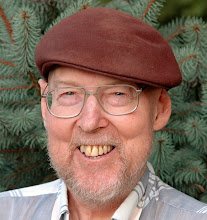
The 7 Paths blog has a new home.
Evergreen Leaders now has a completely revamped website and the 7 Paths blog has migrated to the new site. You can now follow this blog at http://www.evergreenleaders.org/thriving-groups/7-paths-blog.html
See you there and while you're there, feel free to explore the new site. You can learn more about Evergreen Leaders, find tools for annual and capital fund raising campaigns, and watch us grow the site as a resource for folks who want to help their groups thrive by using the 7 Paths.
Monday, September 17, 2007


Wednesday, September 12, 2007
What frustrated donors want
Small business owners are tired of being hit up continually for donations. The topic came up in a conversation I had today with Illinois State Senator Gary Dahl. "There's a golf tournament almost every day during the summer," he said.
What's the alternative?
Annual campaigns.
Four years ago I helped a nonprofit stop doing special events (yes, they did a golf tournaments, dinners, and a dozen other events) and launched an annual campaign. Dahl served as the first chairperson of the campaign.
The organization kept their popular Christmas appeal and then organized volunteers from the business and professional community to meet in person and ask the person for a pledge for the year.
In four years, the nonprofit doubled it's income from the face to face solicitation phase. And the business and professional people were delighted because they knew that at least one major nonprofit in the community was going to ask them only once a year.
What's the alternative?
Annual campaigns.
Four years ago I helped a nonprofit stop doing special events (yes, they did a golf tournaments, dinners, and a dozen other events) and launched an annual campaign. Dahl served as the first chairperson of the campaign.
The organization kept their popular Christmas appeal and then organized volunteers from the business and professional community to meet in person and ask the person for a pledge for the year.
In four years, the nonprofit doubled it's income from the face to face solicitation phase. And the business and professional people were delighted because they knew that at least one major nonprofit in the community was going to ask them only once a year.
Thursday, September 06, 2007
The principle of the the thing
"There is no policy in the handbook forbidding a supervisor from living with someone he or she is supervising," the young supervisor said.
She was right. She was also inadvertently pointing to the flaw of using policies as a management tool.
The supervisor at a community nonprofit faced a housing crisis and she faced who solved her housing problem by moving in with a male staff person whom she supervised.
When the program director discovered her living arrangement, she transferred her to other department so that she would no longer supervise the staff member she was living with. The supervisor objected to the transfer and pointed out she was violating no policy.
That's the inherent weaknesses of running an organization by policies. You can never create enough policies to cover all the crazy things people will do. It would be better to have a few principles, one of them might be, avoid conflicts of interest with anyone that you supervise.
Here’s a quote that expresses what I think about principles and policies:
A principle is just a commonly held guide for thinking, behaving and making decisions. You can manage a process or a machine with regulations, rules, and procedures, but if you want the best chance to capture people’ latent potential, then you start with principles that people “own” and help create.*
Monday, September 03, 2007
Grandeur from rude nature
For the past week Sarah and I have had a young woman living with us, testing the outdoor life by working on the Plow Creek farm. Mandy, a young woman who grew up in a Chicago suburb, gets up at dawn to join several other folks who grow, harvest, and market berries and vegetables.
This morning Mandy asked me where Labor Day came from. “I think it was started by unions to honor workers,” I said.
A little research revealed this gem: “Some records show that Peter J. McGuire, general secretary of the Brotherhood of Carpenters and Joiners and a cofounder of the American Federation of Labor, was first in suggesting a day to honor those ‘who from rude nature have delved and carved all the grandeur we behold.’” The first Labor Day was celebrated on Tuesday, September 5, 1882, in New York City.
I grew up among farmers and who carved grandeur from rude nature. Even though I became disabled in my late teens and moved from the working man world to the white collar world, I am still shaped by growing up among people who worked for a living.
As I’ve been working with a web designer to build a new Evergreen Leaders website, I’ve often thought of my father building a new barn in the early 1960s. Almost all of our neighboring farmers decided they couldn’t make a go of it and moved away from their farms to work in factories.
In today’s post on Labor Day, Seth Godin contrasts the hard physical work of manual labor with the hard work of today–taking risks. My father knew how to do both, work eighteen hour days physically and take the risk of building what at the time was the most advanced dairy barn in Minnesota. Godin describes perfectly the risk he took:
- Today, working hard is about taking apparent risk. Not a crazy risk like betting the entire company on an untested product. No, an apparent risk: something that the competition (and your coworkers) believe is unsafe but that you realize is far more conservative than sticking with the status quo.
Dad took the risk of building that barn, a risk that made it possible for him to raise ten kids on that farm and still be living on the farm 21 years after he retired. Apparent risk is also a way to create grandeur from rude nature.
Wednesday, August 29, 2007
Fundraising as a mangement function
While taking a break from revamping the Evergreen Leaders website, I check out other nonprofit bloggers. I recently discovered Rosetta Thurman's blog, Perspectives from the Pipeline.
Two of the principles mentioned in a post from fundraising school caught my attention:
I chuckled when I read "Whoever spends money..." It takes leaders and a system to apply that principle.
Two of the principles mentioned in a post from fundraising school caught my attention:
- Fundraising is essentially a management process.
- Whoever spends money in your organization should be involved in raising money for it.
I chuckled when I read "Whoever spends money..." It takes leaders and a system to apply that principle.
Saturday, August 11, 2007
Frie green tomatoes and nonprofit leadership
A little after noon today I stopped at the park where the local farmers market does business. I talked to vendors and customers, taking notes for next week's column for our small town's weekly newspaper.
At the Coneflower Farm booth, there were red, yellow, and green tomatoes. I'm familiar with red and yellow varieties but who would want to buy green tomatoes in August? If it were late in the fall and the tomatoes were picked to prevent freezing., I could understand a customer might buy them in hopes that they would ripen. But August? I asked Dennis Zehr from Coneflower Farm about the green tomatoes.
"We sometimes get requests for green tomatoes from customers who want to make fried green tomatoes," he sad. "Usually it's later in the season but I had accidentally knocked these two loose from a vine. I brought them along in case someone wanted green tomatoes."
The best vendors at farmers markets get to know what customers want. It's a business with low margins and the best farmers grow the produce that the most of their customers want and also keep an eye out for what the least of their customers want too.
As someone with a disability who has been on the receiving end of nonprofit services and also spent a career in nonprofit leadership, I know that clients of nonprofits want both the most and the least treasures from a nonprofit.
Patients want the doctor to do a great job on their hip replacement surgery and a day later, when they turn on the call light, they want a personable nurse's aid to help them turn over in bed.
Who's more important? The doctor or the nurses' aid?
Almost everyone would say the doctor is the source of the greatest treasure (that new hip) and yet it's the nurse's aid who spends more time with the patient and is likely to know the patient loves fried green tomatoes.
A leader who wants his or her nonprofit to thrive must cultivate an organization that produces big treasures and little treasures.
At the Coneflower Farm booth, there were red, yellow, and green tomatoes. I'm familiar with red and yellow varieties but who would want to buy green tomatoes in August? If it were late in the fall and the tomatoes were picked to prevent freezing., I could understand a customer might buy them in hopes that they would ripen. But August? I asked Dennis Zehr from Coneflower Farm about the green tomatoes.
"We sometimes get requests for green tomatoes from customers who want to make fried green tomatoes," he sad. "Usually it's later in the season but I had accidentally knocked these two loose from a vine. I brought them along in case someone wanted green tomatoes."
The best vendors at farmers markets get to know what customers want. It's a business with low margins and the best farmers grow the produce that the most of their customers want and also keep an eye out for what the least of their customers want too.
As someone with a disability who has been on the receiving end of nonprofit services and also spent a career in nonprofit leadership, I know that clients of nonprofits want both the most and the least treasures from a nonprofit.
Patients want the doctor to do a great job on their hip replacement surgery and a day later, when they turn on the call light, they want a personable nurse's aid to help them turn over in bed.
Who's more important? The doctor or the nurses' aid?
Almost everyone would say the doctor is the source of the greatest treasure (that new hip) and yet it's the nurse's aid who spends more time with the patient and is likely to know the patient loves fried green tomatoes.
A leader who wants his or her nonprofit to thrive must cultivate an organization that produces big treasures and little treasures.
Wednesday, August 01, 2007
A road-tested vision
In the next few weeks this blog will migrate to a completely revamped Evergreen Leaders web site. Yesterday I began to work with a web designer on the new site.
Our original site was developed by an intern, Kevin Behrens. He did a great job given the fact that Evergreen Leaders was a vision that had not been road tested.
The vision has been road-tested. Now we're ready for a new site that can translate the road-tested version of EGL online.
As I reflect on the road-testing of my vision for EGL the last three years, I wonder what prompted me to launch a new nonprofit in my 50's. I've answered that a number of different ways. First, it's been a call from God. Second, it fit's my passions and talents. Third, I think nonprofits that serve low and moderate income people need our services to help their nonprofits thrive.
As I've founded EGL I realize I have a lot in common with entrepeneurs. Recently I read a column in Inc. Magazine that quotes The Theory of Economic Development published in 1911 by economist Joseph A. Schumpeter who says that entrepreneurs have:
Our original site was developed by an intern, Kevin Behrens. He did a great job given the fact that Evergreen Leaders was a vision that had not been road tested.
The vision has been road-tested. Now we're ready for a new site that can translate the road-tested version of EGL online.
As I reflect on the road-testing of my vision for EGL the last three years, I wonder what prompted me to launch a new nonprofit in my 50's. I've answered that a number of different ways. First, it's been a call from God. Second, it fit's my passions and talents. Third, I think nonprofits that serve low and moderate income people need our services to help their nonprofits thrive.
As I've founded EGL I realize I have a lot in common with entrepeneurs. Recently I read a column in Inc. Magazine that quotes The Theory of Economic Development published in 1911 by economist Joseph A. Schumpeter who says that entrepreneurs have:
- "...the will to conquer: the impulse to fight, to prove oneself superior to others, to succeed for the sake, not of the fruits of success, but of success itself…There is the joy of creating, of getting things done, or simply of exercising one's energy and ingenuity."
Monday, July 23, 2007
I'm back
I'm back from a three week vacation and excited to be growing Evergreen Leaders again.
Three weeks away has given me time to reflect on the broad picture and make course corrections. I've decided to create a new category of posts, CEO notes, to include more about my work with Evergreen Leaders. I'm not abandoning posting about each of the 7 paths; I'm simply making a commitment to write more based on who I am and the day-to-day challenges of launching a nonprofit start-up.
Before I went on vacation I made a presentation to the board of a potential client that wants to do a capital campaign to launch a theater conservatory. I'm excited about the possibility of serving as the campaign consultant and at the same time keeping my hopes in check.
When I launched EGL, I did not know I would spend as much time marketing and fund raising as I am. I also did not know I would spend as much time as I have on the wilderness path trying to discover what treasure nonprofits need that we can offer.
The board and I started out conceiving of EGL as a leadership training organization. As we worked with nonprofits we've discovered they are much more eager to pay for fund raising consulting with its immediate promise of increased income. Leadership coaching and training have a long payoff. I haven't given up the leadership training but we're taking a longer route to get there. More later on the longer route.
Three weeks away has given me time to reflect on the broad picture and make course corrections. I've decided to create a new category of posts, CEO notes, to include more about my work with Evergreen Leaders. I'm not abandoning posting about each of the 7 paths; I'm simply making a commitment to write more based on who I am and the day-to-day challenges of launching a nonprofit start-up.
Before I went on vacation I made a presentation to the board of a potential client that wants to do a capital campaign to launch a theater conservatory. I'm excited about the possibility of serving as the campaign consultant and at the same time keeping my hopes in check.
When I launched EGL, I did not know I would spend as much time marketing and fund raising as I am. I also did not know I would spend as much time as I have on the wilderness path trying to discover what treasure nonprofits need that we can offer.
The board and I started out conceiving of EGL as a leadership training organization. As we worked with nonprofits we've discovered they are much more eager to pay for fund raising consulting with its immediate promise of increased income. Leadership coaching and training have a long payoff. I haven't given up the leadership training but we're taking a longer route to get there. More later on the longer route.
Powered by ScribeFire.
Thursday, June 28, 2007
Work free space
I am off for three, work free, weeks in Minnesota and New York City.
I love working. At the same time, heading up a nonprofit start-up like Evergreen Leaders takes a lot of creative energy. Over the years, I have discovered that if I take a good vacation in the summer, when I get back to work I suddenly have a creative burst that helps me move through intransigent issues that have been a drag on whatever organization I am leading at the time.
Earlier this morning I did a post on Rhythm Path basics. I'm off to create space in my life for that creative burst that will shape my work with Evergreen Leaders when I get back.
I love working. At the same time, heading up a nonprofit start-up like Evergreen Leaders takes a lot of creative energy. Over the years, I have discovered that if I take a good vacation in the summer, when I get back to work I suddenly have a creative burst that helps me move through intransigent issues that have been a drag on whatever organization I am leading at the time.
Earlier this morning I did a post on Rhythm Path basics. I'm off to create space in my life for that creative burst that will shape my work with Evergreen Leaders when I get back.
Powered by ScribeFire.
The rhythm path basics
If you sustain high positive energy on an extremely demanding job, you almost certainly have predictable ways of insuring that you get intermittent recovery. Creating positive rituals is the most powerful means we have found to effectively manage energy in the service of full engagement.
Jim Loehr and Tony Schwarz
Principle: Organizations and individuals thrive on daily and seasonal rhythms.
Paradigm:
Shriveling: “To be productive, we override the natural rhythms of life.”
Thriving: “To be productive, we ride the natural rhythms of life.”
Behavior
¨ Organizational structures support rhythm of challenging work and renewal rituals.
¨ Staff workers are honored for developing positive energy rituals that balance stress and recovery.
Results
¨ Staff workers are highly productive.
¨ Staff workers do not burn out.
¨ Organization is known as a great place to work.
Powered by ScribeFire.
Tuesday, June 26, 2007
Treasure path basics
When potential clients and potential staff knock on your nonprofit’s door, they are looking for a treasure. You need to know the answer to two questions. What are they looking for? What will they find?
Rich Foss
Principle: Organizations thrive on the treasure of meeting deep human needs and being a great place to work.
Paradigm
Shriveling: We value the bottom line above all else.
Thriving: We value transforming lives through meeting deep human needs and we value the people who produce the golden egg.
Behavior
¨ Our board clearly defines our treasure--who we offer our golden egg to and what their transformed lives look like.
Results
¨ The board measures the effectiveness of the organization based on clients lives being transformed.
¨ Everyone knows their job is important because it helps produce the treasure.
¨ Everyone is recognized for good work.
¨ A culture of honesty, respect, responsibility, and quality work.
¨ Every person feels cared for by their supervisor or someone in the organization.
Check out this quick summary of the 7 Paths.
Thursday, June 21, 2007
Humble hierarchy path basics
Rich Foss
¨ Shriveling: Leaders use power to benefit themselves.
¨ Thriving: "We constantly focus on transforming the lives of those the organization serves and creating decision-making space for the voices and talents of all to produce the treasure."
Organizational behavior
¨ Majorities and minorities lead together.
Results
Check out this quick summary of the 7 Paths.
Saturday, June 09, 2007
Coaching trail blazers
| Coaching trail blazers |
 |
| April 5, 2007 issue of 7 Paths e-letter “Dad, I didn’t get the Community Foundation grant,” my daughter, Hannah Hackworth, said in a phone call last week. “That’s the eighth grant I’ve applied for and didn’t get.” “At the heart of the problem,” Hannah says, “our current health systems are highly fragmented and a source of utter confusion” for elders who often find themselves interacting with numerous doctors, hospitals, home health agencies, senior programs, etc. Wisdom for the week: Nonprofit treasures are created one conversation at a time. |
My neighbor's labor of love
| My neighbor's labor of love |
| March 22, issue of 7 Paths e-letter Last summer Sarah and I stopped in at a neighbor’s farm on a Sunday afternoon. Dan was cutting granite pieces for the fireplace in the lodge he’s building. The lodge is located in a wooded area next to a pond with a fountain. Wisdom for the week: Make your work a labor of love; organizations thrive on craftsmanship. |
Monday, June 04, 2007
Fervently calling a soldier a hero
One day several year ag0, shortly after America began a policy of torture as part of its response to 9-11, I suddenly had a sick feeling in my stomach. What will this do to the men who do the torturing? What will it be like when they return to the USA?
Now this Washington Post story describe the tortured lives of torturers after they return to the USA. Torture, it turns out, is not a smart a friendly system that brings about the treasure of democracy.
It seems to me that one way we as a country deal with our guilt over sending young men and women to distant lands to kill and maim and be killed and maimed is to fervently call our soldiers heroes. The story aptly described that when you are suffering for what you've done in war, being called a hero doesn't help.
A humble man does not cut a soldier off by calling him a hero. He istens.
Now this Washington Post story describe the tortured lives of torturers after they return to the USA. Torture, it turns out, is not a smart a friendly system that brings about the treasure of democracy.
It seems to me that one way we as a country deal with our guilt over sending young men and women to distant lands to kill and maim and be killed and maimed is to fervently call our soldiers heroes. The story aptly described that when you are suffering for what you've done in war, being called a hero doesn't help.
A humble man does not cut a soldier off by calling him a hero. He istens.
Monday, May 21, 2007
Doing more for a cool planet
To produce a treasure you need a smart and friendly system. Seth Godin rightly points out that humans have a powerful impulse to do more. So what's a smart and friendly system to get us humans to produce less carbon emissions to reduce global warming? Here's Seth's take:
- let's figure out how to turn this into a battle to do more, not less. Example one: require all new cars to have, right next to the speedometer, a mileage meter. And put the same number on an LCD display on the rear bumper. Once there's an arms race to see who can have the highest number, we're on the right track.
Sunday, May 20, 2007
Riding the waves: Using the rhythms of life to be highly productive.
"How are you doing?" I asked my daughter, Hannah, in a phone call last Friday at 4:00 p.m. I knew she was is in the middle of preparing a big grant due next Wednesday. She'd been working on it all day and planned on working through the evening.
"I'm bogged down," she said in a weary voice.
"Hannah, I have a good idea. Do you want to hear it?"
"What?" she said in a flat tone that let me know that the last thing she wanted to hear was one more good idea."
"Take a 15 minute walk and when you get back you'll think much more creatively,"applying the rhythm path to her situation."
"I'll take a break in a few minutes," she said, still sounding weary.
About 8:00 in the evening I called and she sounded re-energized and was making good progress.
Later, after she was home, I asked her if she had gone on a walk. She had not only gone for a power walk but on the walk she had used her Blue Tooth to talk with her 11-month old daughter and her mother who was taking care of her baby. The exercise and connecting with two people she loves was just eneough recovery time to give her the energy to work another five productive hours.
"I'm bogged down," she said in a weary voice.
"Hannah, I have a good idea. Do you want to hear it?"
"What?" she said in a flat tone that let me know that the last thing she wanted to hear was one more good idea."
"Take a 15 minute walk and when you get back you'll think much more creatively,"applying the rhythm path to her situation."
"I'll take a break in a few minutes," she said, still sounding weary.
About 8:00 in the evening I called and she sounded re-energized and was making good progress.
Later, after she was home, I asked her if she had gone on a walk. She had not only gone for a power walk but on the walk she had used her Blue Tooth to talk with her 11-month old daughter and her mother who was taking care of her baby. The exercise and connecting with two people she loves was just eneough recovery time to give her the energy to work another five productive hours.
Monday, May 07, 2007
Starting over
Since co-founding a nonprofit three years ago (Evergreen Leaders) I've been a beginner at one thing after another. Even things that I've done for other organizations have me feeling like a beginner when I do them for the first time for EGL.
I've helped other organizations raise millions but today when I e-mail the board to tell them we need to raise $15,000 to create a website that can host a complete set of plans for annual and capital campaigns for other nonprofits, and serve as part of a platform for a book on nonprofit leadership, I feel like a beginner.
Reading Michele Martin's How to be a beginner was exactly what I needed as I wrap up my day this evening. Here are two good quotes:
Check out Michele's "The Bamboo Project Blog."
I've helped other organizations raise millions but today when I e-mail the board to tell them we need to raise $15,000 to create a website that can host a complete set of plans for annual and capital campaigns for other nonprofits, and serve as part of a platform for a book on nonprofit leadership, I feel like a beginner.
Reading Michele Martin's How to be a beginner was exactly what I needed as I wrap up my day this evening. Here are two good quotes:
- Part of learning and growing, I think, is getting comfortable with being a beginner.
- Be willing to fail publicly. This is the hardest one for me. I prefer to fail quietly, behind the scenes, not in front of an audience. But you don't get feedback when you always fail alone, so sometimes you have to be willing to take a risk where people can see you.
Check out Michele's "The Bamboo Project Blog."
The kindness economy
| The kindness economy |
|
| As I twisted the gas cap on my Dodge Caravan a well-dressed stranger, a seventy-something lady, came around the gas pump and said, “Could you show me how to do this? My husband died and I don’t know how to fill on gas.” “Someone’s going to get a free cart,” I said. “My quarter is stuck in this one.” Wisdom for the week: At their best, nonprofits run on an economy of kindness among strangers. 7 Path of Thriving Organizations, #103, March 1, 2007 |
Sunday, April 29, 2007
Eliminate what?

4. Eliminate management, organization charts, job descriptions, and hourly wages.
I enjoy people who approach life from less than standard approaches. I’ve regularly made suggestions in the organizations I’ve been apart of that have led people to look at me askance.
A good friend of mine recently sent his son to talk to me about his career because, as he told his son, “Rich thinks out of the box and some of his ideas are downright hare-brained.”
So far in Bakke’s Joy at Work Top Ten I’ve been enthusiastic. But I must admit even I, when I read “eliminate management”, was taken aback.
Bakke’s #4 touches on one of the 7 paths that I’ve written about before--the smart and friendly systems path. Every organization develops systems. The trick is to dazzle people with your organization's smart and friendly systems.
Most nonprofits have management, organization charts, job descriptions, and categorize staff as hourly or salary. Each of these is so much a part of companies and nonprofits in the
But none of the standard organizational practices were handed down by God as part of the Ten Commandments and thus we are free to ask if they are smart and friendly systems. Do they really help your nonprofit transform the lives of the people you serve and do they really make your nonprofit to be a great work place?
While trying to create a fun work place at the energy giant, AES, Bakke noted that dividing workers into salary and hourly divided people which does not make for a fun work place. Bakke went on a campaign to put everyone in his company on salary. Of course, that’s against the law. The Fair Labor Standards Act was passed in the 1930s to protect hourly workers and to ensure they were paid overtime for work over 40 hours a week.
Bakke made working on a salary such a great system for workers, that almost everyone, including union workers, voluntarily joined the salary system. As a built-in safe guard, and to keep the company out of legal trouble, workers eligible under law to be hourly, could switch back to hourly any time they wanted.
Former hourly workers often discovered that they could work less hours and still get paid the same.
Do your systems, including managers, really make your nonprofit a smart a friendly workplace? If not, eliminate them and come up with smart and friendly systems.
Subscribe to:
Posts (Atom)